



Finding the best smartphone under ₹10,000 in India is no longer about settling for the least bad option. This year, the budget segment has matured in a big way. You now get proper 5G support, smoother 90Hz and 120Hz displays, usable 50MP cameras, and batteries that can comfortably survive a full day of calls, UPI, YouTube, and social media. For students, first-time buyers, parents buying a second phone, and anyone upgrading from an older 4G device, this category finally feels practical instead of compromised.
That said, this price range still demands careful picking. On paper, many phones look similar. In real life, they are not. Some run hotter in 45°C Indian summers, some have better 5G band support for Jio and Airtel, some feel smoother because of cleaner software, and some simply age better because the brand has stronger service reach. That is exactly where this guide helps.
How We Picked the Best Smartphones Under ₹10,000?
To build this list, the focus stays on phones that genuinely sell around ₹10,000 after regular online deals, bank offers, and price drops — not just on launch-day claims. The priority was simple: stable 5G performance in India, decent everyday cameras, practical battery life, at least 4GB RAM, and enough long-term usability to make sense in 2026.
Just as important, this ranking looks beyond specs. A 50MP camera means little if low-light photos are muddy. A 120Hz display sounds great until the processor cannot keep up. And a strong chip matters less if the phone becomes uncomfortable during summer gaming. That is why this guide weighs the real experience: UI smoothness, haptics, heat management, camera tuning, service support, and how well each phone fits actual Indian usage.
8 Best Smartphones Under ₹10,000 in India [2026]
| Rank | Model | Hero Specs | Expert Rating | Buy Link |
| 1 | Poco M6 5G | Dimensity 6100+ + wide 5G band support | 8.7/10 | Check on Amazon |
| 2 | Redmi 13C 5G | Dimensity 6100+ + 50MP camera | 8.5/10 | Check on Amazon |
| 3 | Samsung Galaxy F06 5G | 12-band 5G + 4 OS upgrades | 8.4/10 | Check on Amazon |
| 4 | Infinix Hot 50 5G | 120Hz display + Dimensity 6300 | 8.2/10 | Check on Amazon |
| 5 | Lava Blaze 5G | Clean Android + band 28 focus | 8.1/10 | Check on Amazon |
| 6 | Lava Blaze 2 5G (6GB RAM) | 6GB RAM + 128GB storage | 8/10 | Check on Amazon |
| 7 | Poco C75 5G | Affordable entry into 5G | 7.9/10 | Check on Amazon |
| 8 | Redmi 14C 5G | Updated Redmi value package | 7.8/10 | Check on Amazon |
Best Phones Under ₹10,000 in India [Detailed Review]
1) Poco M6 5G – The Smartest All-Round Buy Under ₹10K

🔲 Processor — Dimensity 6100+ · 4GB/6GB RAM · 128GB storage · smoother app switching & fewer stutters than entry-level rivals
🖥️ Display — 6.74″ HD+ IPS · 90Hz · social feeds, reels & chats feel noticeably less sluggish than a standard 60Hz phone
📷 Camera — 50MP rear · 5MP front · solid for daylight & indoor social uploads · low-light shots are soft, manage expectations at night
🔋 Battery — 5000mAh · 18W charging · full day of 5G data, streaming, calls & navigation without anxiety
📶 5G — Strong multi-band support · one of the most genuinely network-ready phones for Jio & Airtel in the segment
⚠️ Note — MIUI ads & bloat need 10 mins of manual cleanup on first boot · experience improves dramatically after
If your day revolves around Instagram Reels, Metro commutes, YouTube, WhatsApp, and the occasional BGMI session, the Poco M6 5G is still the safest all-around pick in this segment.
What makes the Poco M6 5G stand out is its balance. The Dimensity 6100+ chip does not sound flashy, but in daily use, it delivers what matters: smoother app switching, fewer random stutters, and enough power for casual gaming without making the phone feel exhausted. The 6.74-inch 90Hz display keeps scrolling fluidly, which means social feeds, shopping apps, and long chats simply feel less sluggish than on a basic 60Hz phone. That is the real “so what” here — you notice the smoothness every few minutes, not just in benchmarks.
For Indian users, the strong 5G band support is a major win. This is one of those phones that feels properly ready for Jio and Airtel rather than just being “5G on paper.” Battery life is dependable, too. The 5000mAh cell comfortably carries a full day of mixed use, including 5G data, streaming, calls, and navigation. In Delhi-like summer heat, it does warm up during longer gaming sessions, but it stays manageable if you keep graphics sensible.
The rear 50MP camera is solid for daylight and indoor social uploads. Don’t expect miracles at night — low-light shots are soft and noisy — but for the money, it gets the job done. The biggest drawback remains MIUI clutter. Spend ten minutes cleaning up recommendations and unwanted notifications, and the experience improves dramatically.
Pros
– Reliable Dimensity 6100+ performance for daily use and casual gaming
– Good 5G band coverage for Indian networks
– Smooth 90Hz display
– Strong battery life
Cons
– MIUI ads and bloat need manual cleanup
– The low-light camera is average
– Charging is only standard for the segment
2) Redmi 13C 5G – Best for Social Media-First Users
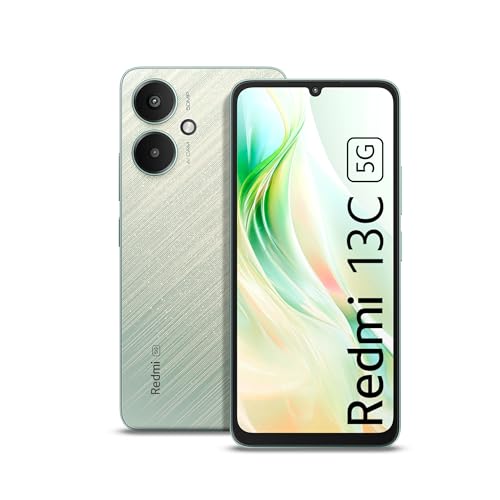
🔲 Processor — Dimensity 6100+ · same trusted chipset as M6 5G · handles Chrome, Maps, YouTube & moderate multitasking well
📷 Camera — 50MP rear · more vibrant colours & stronger HDR than most rivals · bold daylight shots ready to post directly · 5MP front for casual selfies & video calls
🖥️ Display — 90Hz panel · feels more polished than older entry-level Redmi models that slowed down after a few months
🔋 Battery — 5000mAh · dependable all-day backup · decent heat control in Indian summer for non-outdoor use
📶 5G — Works reliably on Jio & Airtel · good band support for users who travel between cities
⚠️ Note — Extra apps, occasional spammy prompts & UI cleanup needed · selfie camera is functional, not impressive
If you treat Instagram like a side hustle, click a lot of food photos, and want a dependable 5G phone without stretching your budget, the Redmi 13C 5G makes a lot of sense.
Under the skin, it shares a lot with the Poco M6 5G, and that is not a bad thing. The Dimensity 6100+ remains one of the most sensible chipsets in this class. In real-world use, it feels quick enough for Chrome, Maps, YouTube, WhatsApp, and moderate multitasking. The 90Hz display helps the phone feel more polished than its price suggests, especially when compared with older entry-level Redmi models that felt slower after just a few months.
Where Redmi edges ahead for some users is image tuning. The 50MP rear camera often delivers more vibrant colors and stronger HDR, which works beautifully for social media. Daylight images look bold and ready to post, even if low-light quality still falls short. The 5MP front camera is usable for video calls and casual selfies, though not a highlight.
From an Indian usage standpoint, the band support is reassuring. It works well for users switching between Jio and Airtel, especially if you travel between cities. Heat control is also decent in summer as long as you are not gaming outdoors at max brightness. The biggest trade-off is familiar Xiaomi baggage: extra apps, occasional spammy prompts, and the need for initial setup work.
Pros
– One of the best 5G phones under 10000 in Indian market right now.
– Vibrant 50MP rear camera in daylight
– Strong 5G compatibility for Indian operators
– Good battery life with dependable performance
Cons
– UI needs cleanup for the best experience
– The selfie camera is only average
– Night photography is limited
Check Redmi 13C 5G Latest Price on Amazon
3) Samsung Galaxy F06 5G – The Long-Term Safe Choice
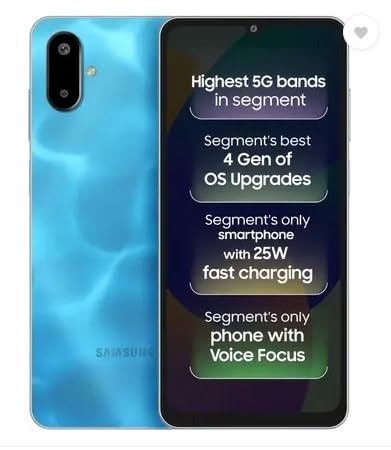
🔄 Software — 4 OS upgrades + 4 years of security patches · rare at this price · safe to recommend 2–3 years from now
🔲 Processor — Dimensity 6300 · efficient & dependable for daily apps, streaming, 5G & multitasking · not gaming-first
📷 Camera — 50MP rear · consistent daylight shots · cleaner night images over aggressive detail · honest, reliable output
📶 5G — 12-band 5G · one of the most network-ready phones in segment · less likely to hit compatibility issues as operators expand
🖥️ Display — Clean HD+ panel · One UI Core · fewer distractions, polished touch response, subtle but respectable haptics
🏪 Service — Wide Samsung service centre network · strongest walk-in support · ideal for parents, students & tier-2/3 city buyers
If you want a budget phone from a brand your family already trusts, with wide service support and fewer software headaches, the Samsung Galaxy F06 5G is the peace-of-mind pick.
Samsung plays a different game here. Instead of chasing flashy marketing, it leans into longevity. That matters. In this budget, four OS upgrades and four years of security updates are a huge deal. It means the phone is not just cheap today — it is easier to recommend two or three years down the line. For parents, students, and users in tier-2 or tier-3 cities, that kind of long-term confidence matters more than a few extra benchmark points.
The Dimensity 6300 chip is efficient and dependable. It is not the top choice for serious gaming, but it handles daily apps, 5G usage, streaming, and multitasking without drama. More importantly, Samsung’s 12-band 5G setup makes this one of the most network-ready phones in the segment. That is the real advantage: you are less likely to run into compatibility issues as operators expand coverage.
One UI Core is another reason this phone feels better than the raw price suggests. It is cleaner than many rivals, with fewer distractions and a more polished touch response. The haptics are subtle but respectable. Camera quality is reliable rather than exciting. In daylight, the 50MP sensor delivers consistent shots. At night, Samsung prioritizes cleaner-looking images over aggressive detail, so low-light photos are softer but still usable.
Pros
– Among the most complete options under ₹10,000
– Excellent long-term software support
– Wide Samsung service center network
– 12-band 5G gives better future readiness
– Clean, stable UI
Cons
– Not the strongest for gaming
– Charging speed is just average
– The camera is dependable, not class-leading
Check Samsung Galaxy F06 5G Price on Amazon
4) Infinix Hot 50 5G – Best for Smooth Scrolling on a Tight Budget

🖥️ Display — HD+ IPS · 120Hz · smoothest refresh rate for the price · swiping, scrolling & jumping apps feels genuinely more modern
🔲 Processor — Dimensity 6300 · efficient for daily use · handles MLBB, BGMI & similar games at sensible settings
📷 Camera — 48MP rear · decent in good light · 8MP front selfie sensor · functional for video calls, not a standout shooter
🔋 Battery — Solid battery life · holds up through a full day of mixed use
📱 Software — XOS · busier than Samsung or Lava out of the box · improves meaningfully with some tuning on first setup
⚠️ Note — HD+ panel limits sharpness · camera performance is decent, not exciting · XOS needs cleanup before it feels smooth
If you watch a lot of YouTube, spend hours on OTT apps, and want the smoothest screen experience possible under budget, the Infinix Hot 50 5G deserves attention.
Its headline feature is obvious: the 120Hz display. And yes, it matters. The panel is only HD+, but the faster refresh rate makes the phone feel more alive. Swiping through menus, scrolling feeds, and jumping across apps feels smoother than what many people expect from a sub-₹10K phone. That is the real everyday benefit of a high refresh rate — the device simply feels more modern.
The Dimensity 6300 chipset also helps. It is efficient, reasonably quick for daily use, and capable of light-to-moderate gaming. If you are specifically looking for the best smartphone under 10000 for gaming, this is a decent option for users who care more about responsiveness than raw graphics quality. MLBB, BGMI, and similar games run fine at sensible settings, though you will see dips if you push too hard in high ambient temperatures.
Infinix’s 48MP camera is decent in good light, and the 8MP selfie sensor is functional for video calls. The bigger concern is software. XOS has improved, but it still feels busier than Samsung’s UI or Lava’s cleaner software approach. With some tuning, it becomes easier to live with, but out of the box, it feels a bit noisy.
Pros
– A 120Hz display phone under 10000 is still rare and appealing
– Good everyday speed with Dimensity 6300
– Competitive pricing
– Solid battery life
Cons
– The HD+ panel is not very sharp
– XOS needs tuning for a cleaner experience
– Camera performance is only decent, not standout
Buy Infinix Hot 50 5G on Amazon
5) Lava Blaze 5G – Clean Software, Indian Focus

📱 Software — Near-stock Android · no bloat, no recommendations, no noisy UI · lighter on RAM, cleaner long-term ownership
🔲 Processor — Dimensity 700 · older chip but handles calling, messaging, navigation, social media & light entertainment fine
📷 Camera — 50MP rear · performs well in daylight · more natural processing · low-light trails Redmi & Samsung options
📡 Connectivity — Band 28 5G focus · stronger indoor signal penetration · more stable in rural pockets & fringe areas
✨ Design — Glass-like finish · more premium feel than most generic budget phones at this price
⚠️ Note — Dimensity 700 showing age vs newer 6100+ & 6300 rivals · weaker resale value than Samsung or Xiaomi
If you value clean Android, simpler software, and better confidence in patchy signal areas, the Lava Blaze 5G remains one of the most interesting made-for-India options.
Lava’s appeal is not just patriotism. It is practicality. The Blaze 5G offers a stock-like software experience that feels refreshingly light in a market full of bloat-heavy interfaces. That cleaner software helps even moderate hardware feel smoother for longer. The Dimensity 700 chip is older now, but in regular use, it still handles calling, messaging, navigation, social media, and light entertainment without major trouble.
Where the phone becomes more relevant in India is the connectivity philosophy. Lava’s focus on band 28 support matters more than many buyers realize. In rural pockets, fringe areas, and buildings with weaker signal penetration, low-band support can make the difference between a usable network and frustrating dropouts. If your usage takes you beyond major urban centers, that is a real-world advantage, not a spec-sheet trick.
The 50MP rear camera performs well in daylight, and the design feels more premium than expected. The glass-like finish gives it more character than many generic budget phones. The downside is that low-light image processing still trails the better Redmi and Samsung options, and the Dimensity 700 is beginning to show its age against newer 6100+ and 6300 devices.
Pros
– Clean, near-stock Android experience
– Strong India-first positioning with band 28 emphasis
– Decent daylight camera
– Good pick for users who hate bloatware
Cons
– Older chipset compared to newer rivals
– The low-light camera is behind the segment leaders
– Long-term resale is weaker than that of Samsung or Xiaomi
6) Lava Blaze 2 5G (6GB RAM) – Best 6GB RAM Phone Under ₹10,000

💾 RAM & Storage — 6GB RAM + 128GB storage · Chrome tabs stay open, Instagram reloads less, WhatsApp & Maps run better in background
🔲 Processor — Dimensity 6020 · competent for mainstream use · pairs well with extra RAM for a consistent, stress-free experience
🖥️ Display — 90Hz panel · smoother than base 60Hz rivals · good for students & everyday semi-urban users
📷 Camera — Natural-looking daylight photos · less aggressively processed than Redmi · low-light is limited
📡 Connectivity — Band 28 5G · dedicated microSD slot · practical for real Indian usage beyond metro areas
📱 Software — Clean near-stock Android · lighter interface · strong pick for buyers who hate bloatware at this price
If you keep too many apps open, hate reloads, and want the most multitasking-friendly option in this bracket, the Lava Blaze 2 5G 6GB variant is the clear value pick.
This is the easiest recommendation for buyers specifically searching for a phone under 10k with 6GB RAM. And that extra RAM is not just a spec to brag about. It helps with real-life smoothness. Chrome tabs stay open longer, Instagram does not reload as often, WhatsApp and Maps behave better in the background, and the phone simply feels less stressed during multitasking.
The Dimensity 6020 is not dramatically ahead of the Dimensity 700 family, but it is still competent enough for mainstream use. Pair that with 128GB storage, a 90Hz display, and clean near-stock software, and the phone makes a lot of sense for budget buyers who care more about a consistent experience than flashy marketing. It is especially appealing for students and users in semi-urban areas who want a practical 5G phone with room to breathe.
Camera quality is respectable in daylight, with photos that look more natural than aggressively processed. The dedicated microSD slot and Lava’s band 28 network focus only make it more useful for real Indian usage. The main drawbacks are weaker low-light imaging and the fact that Lava still lacks the brand pull of Samsung or Xiaomi.
Pros
– Best 6GB RAM phone under 10000
– 128GB storage at aggressive pricing
– Clean Android-like software
– Strong value for multitasking
Cons
– A low-light camera is limited
– Brand perception is still catching up
– Resale value is not the strongest
Check Lava Blaze 2 5G 6GB Price on Amazon
7) Poco C75 5G – Cheapest Mainstream Entry Into 5G

🔋 Battery — Large cell · reliable all-day backup · built for calling, UPI, YouTube & browsing without drama
📶 5G — Entry-level 5G from a familiar brand · good upgrade path from old Redmi or Poco 4G phones
🖥️ Display — Adequate screen · does enough for basic daily use · not aspirational
📷 Camera — Basic shooter · covers everyday needs · not a reason to buy this phone
⚠️ Note — Heavier software clutter than M-series · ads harder to ignore · plastic build warms during calls/streaming in heat
💡 Verdict — Best value only if priced significantly lower than Poco M6 5G · otherwise step up to the M6
If your only goal is to get into 5G at the lowest possible price from a familiar brand, the Poco C75 5G is worth considering.
The C-series formula is straightforward: big battery, decent screen, basic camera, and aggressive pricing. That is exactly what you get here. This phone is not trying to be premium. It is trying to be accessible. For calling, UPI, YouTube, browsing, and light app use, it is perfectly serviceable. The battery holds up well, and the 5G-ready positioning will appeal to people upgrading from old Redmi or Poco 4G phones.
In real use, however, you can feel where the compromises begin. The software is heavier than on Poco’s better M-series models, and the ads or recommendations are harder to ignore. The display and camera do enough, but they do not feel aspirational. That is the key thing to understand: this is not the best phone here, just one of the cheapest ways into the 5G ecosystem from a mainstream brand.
Thermals are acceptable, though the plastic build can feel warm during longer calls or streaming sessions in hot weather. If the price gap is small, most buyers should step up to the Poco M6 5G instead.
Pros
– Cheap way into 5G
– Good enough for basic daily use
– Familiar brand ecosystem
– Reliable battery life
Cons
– More intrusive software clutter
– Basic camera and screen
– Worth buying mainly if priced significantly lower
8) Redmi 14C 5G – A Newer Redmi for Buyers Who Want Familiarity

🖥️ Display — 90Hz panel · balanced and smooth for everyday use · no major weaknesses, no standout strengths
📷 Camera — 50MP rear · decent combination for everyday shots · not class-leading but reliable for social content
🔋 Battery — 5000mAh · consistent all-day backup · pairs well with broad 5G compatibility for travel between cities
🔲 Processor — Competent chipset · handles daily apps smoothly · long gaming sessions at high brightness raise temps noticeably
🛍️ Ecosystem — Easy accessory availability · familiar Redmi UI · solid service & repair comfort across India
⚠️ Note — Iterative upgrade over 13C 5G · MIUI-style clutter remains · not the segment leader in any single area
If you like Redmi phones, want something newer than the 13C 5G, and prefer sticking to a well-known ecosystem for cases and support, the Redmi 14C 5G is a sensible, if not revolutionary, option.
This phone feels like an evolutionary update rather than a major leap. That is not necessarily a bad thing. Redmi knows how to build value-first smartphones, and the 14C 5G keeps that formula intact with a 90Hz display, 50MP camera, 5000mAh battery, and broad 5G compatibility. For many buyers, especially less tech-obsessed ones, familiarity matters. The UI, accessory availability, and service comfort all help.
What this phone does well is consistency. It offers a balanced experience with few outright weaknesses, but it also lacks a killer feature. It does not beat the Poco M6 5G for value, does not beat Samsung for trust and updates, and does not beat Infinix for display refresh rate. It simply remains a steady option for users who prefer Redmi’s established formula and want a newer-generation budget 5G model.
Heat management is decent, but like most budget Redmi phones, long gaming sessions at high brightness will raise temperatures noticeably in summer.
Pros
– Familiar Redmi value package
– Good 5G support
– Decent camera and battery combination
– Easy ecosystem for accessories and repairs
Cons
– Feels iterative rather than exciting
– MIUI-style clutter remains
– Not the segment leader in any one area
Buying the Best 5G Phone Under ₹10,000: What Actually Matters?
1. 5G Bands and Network Readiness
If you are shopping for the best 5G smartphone under 10000, ignore marketing labels and check actual band support. In India, phones with support for n1, n3, n5, n8, n28, n40, and n78 are simply more future-ready. These bands matter for Jio, Airtel, and Vi as networks spread deeper into cities and towns.
2. Processor and Gaming Performance
If gaming matters, focus on chipset efficiency and heat control. The best options in this price bracket rely on Dimensity 6100+, 6300, 6020, and 700-class processors. These are fine for BGMI, Free Fire, Call of Duty: Mobile, and MLBB at low to medium settings. Just do not expect sustained max graphics in summer conditions.
3. RAM and Storage
In 2026, 4GB RAM is still workable, but 6GB is the smarter long-term choice. That is why the best smartphone under 10000 with 6GB RAM has more value than it may seem on paper. More RAM means fewer reloads, better background app retention, and a smoother feel after months of updates and storage buildup.
4. Display Quality
A 90Hz or 120Hz refresh rate makes a bigger everyday difference than many buyers realize. It improves scrolling, animation smoothness, and the general “speed feeling” of the phone. Resolution still matters, but at this level, outdoor brightness and touch responsiveness are often more important than pixel density alone.
5. Camera Quality
Do not get trapped by megapixel marketing. A 50MP sensor is common, but image processing, HDR balance, and low-light tuning are what actually shape photo quality. In this segment, expect good daylight results, decent indoor photos, and average night performance.
6. Battery and Charging
Most of the good options here offer 5000mAh batteries, which is enough for a full day of mixed Indian usage. Charging around 18W is standard. It works, but it is not fast. If you are always moving between work, college, and travel, even small charging differences start to matter.
What to Check When Buying Smartphones Under 10,000? [Quick Check List]
Use this quick checklist if you are comparing fresh launches or last-minute deals:
1. Processor: Look for Dimensity 6100+, 6300, or similar 5G-ready efficient chips.
2. RAM: Prefer 6GB if you want better long-term usability.
3. Storage: 128GB is ideal; 64GB is only acceptable if the price is excellent.
4. Display: 90Hz is the baseline, 120Hz is a nice bonus.
5. 5G support: Prioritize phones with strong Indian band support.
6. Camera tuning: Choose better image processing over extra useless camera lenses.
7. Charging: 18W is normal; below that feels slow in 2026.
What to Expect From Phones Under ₹10,000? Let’s Be Practical
This is the part many buyers need to hear clearly: Smartphones under ₹10,000 are now genuinely capable. They can comfortably handle UPI, WhatsApp, YouTube, online classes, web browsing, Instagram, Google Maps, and moderate gaming. For everyday use, they are far more complete than older budget phones used to be.
But there are still limits. You should not expect top-tier low-light photography, heavy 3D gaming at max settings, fast video rendering, or polished flagship-grade haptics. These are phones built for practicality, not excess. Buy with the right expectations, and this segment delivers excellent value.
Verdict: Final Recommendations!
The Value King: Poco M6 5G
For most buyers, the Poco M6 5G remains the strongest all-around recommendation. It gets the basics right: capable performance, strong 5G support, a smooth 90Hz display, reliable battery life, and pricing that usually stays comfortably within budget. If you want the best phone under 10000 in India 2026 without overthinking the decision, this is the easiest answer.
The Ultimate Budget All-Rounder: Samsung Galaxy F06 5G
If long-term ownership matters more than raw value, the Samsung Galaxy F06 5G is the smarter pick. Its wider 5G support, better software promise, cleaner interface, and trusted after-sales network give it a level of confidence few budget phones can match. For users who keep phones for years, this is the most reassuring option in the category.
FAQs
1. Which is the best 5G phone under ₹10,000 in India right now?
The Poco M6 5G is the strongest all-around choice because it combines solid performance, reliable 5G support, a smooth display, and good battery life at a very competitive price.
2. Which phone under ₹10,000 with 6GB RAM is worth buying?
The Lava Blaze 2 5G 6GB RAM variant is the smartest option if your priority is multitasking, smoother long-term use, and strong value for money.
3. Are phones under ₹10,000 good enough for gaming in India?
Yes, for casual to moderate gaming. Titles like BGMI, Free Fire, MLBB, and Call of Duty: Mobile run well at low to medium settings. Just expect some heat and mild throttling during long sessions in peak summer.



![12 Best Earbuds Under ₹3,000 in India [2026] | GadgetVeda](https://gadgetveda.com/wp-content/uploads/2026/09/Best-Earbuds-Under-₹3000-in-India-150x150.webp)
![11 Best Washing Machines Under ₹50,000 in India [2026]](https://gadgetveda.com/wp-content/uploads/2026/09/Best-Washing-Machines-Under-₹50000-in-India-150x150.webp)
![14 Best Wireless Earbuds Under ₹2,000 in India [2026]](https://gadgetveda.com/wp-content/uploads/2026/09/Best-Wireless-Earbuds-Under-₹2000-in-India-150x150.webp)
![10 Best Wireless Earbuds Under ₹1,000 in India [2026]](https://gadgetveda.com/wp-content/uploads/2026/09/Best-Wireless-Earbuds-Under-₹1000-in-India-150x150.webp)


![12 Best Earbuds Under ₹3,000 in India [2026] | GadgetVeda](https://gadgetveda.com/wp-content/uploads/2026/09/Best-Earbuds-Under-₹3000-in-India-300x167.webp)
![11 Best Washing Machines Under ₹50,000 in India [2026]](https://gadgetveda.com/wp-content/uploads/2026/09/Best-Washing-Machines-Under-₹50000-in-India-300x167.webp)
![14 Best Wireless Earbuds Under ₹2,000 in India [2026]](https://gadgetveda.com/wp-content/uploads/2026/09/Best-Wireless-Earbuds-Under-₹2000-in-India-300x167.webp)
![10 Best Wireless Earbuds Under ₹1,000 in India [2026]](https://gadgetveda.com/wp-content/uploads/2026/09/Best-Wireless-Earbuds-Under-₹1000-in-India-300x167.webp)