


![9 Best Ceiling Fans Under ₹5,000 in India [2026]](https://gadgetveda.com/wp-content/uploads/2026/05/9-Best-Ceiling-Fans-Under-₹5000-in-India-2026.webp)
Walk into any electronics store in India right now, and you will notice something has quietly shifted in the ceiling fan aisle. The plain white box with a model number and a 75 W sticker is no longer what serious buyers reach for. At ₹3,000–₹5,000, the conversation has moved decisively upward — to BLDC motors that sip 28–35 W instead of guzzling 75 W, aerodynamic blades that move 220–250 CMM of air without sounding like an old mixer grinder, and remote controls that finally let you change speeds from bed at 2 AM without hunting for the regulator knob. If you are genuinely looking for the best ceiling fans under 5000, you already know the basics aren’t good enough — and you do not have to settle for them.
This price band for premium BLDC fans in India is where the real engineering arms race is playing out. Brands like Atomberg, Crompton, Orient, KUHL, RR, Havells, and ACTIVA are all chasing the same buyer — someone who runs a fan 10–14 hours a day through a brutal Indian summer, lives in a city where power fluctuates between 165 V and 285 V without warning, and wants the ceiling fan to feel as considered as every other premium fixture in the room. Moonbeam LED modules, designer wood-finish hubs, anti-dust blade coatings, and smart remotes with Sleep Mode are no longer luxury add-ons here — they are table stakes. The best ceiling fan under 5000 in 2026 needs to survive both 45°C outdoor heat and your electricity bill simultaneously.
GadgetVeda does not evaluate ceiling fans the way a spec sheet does. Every model that makes it into this guide is assessed on CMM-per-watt efficiency — because raw airflow means nothing if the motor is burning your units — as well as blade pitch geometry, wind-shear noise levels, motor temperature under continuous 12–24 hour load, bearing smoothness at full speed, and the one thing most reviews skip entirely: how stable the remote receiver chip stays when a cheap inverter or a voltage surge hits the line. We test wobble on standard Indian J-hooks, not laboratory rigs. We run fans through dip cycles down to 165 V to see which ones hold speed and which ones sag. The nine models ranked below earned their spots by performing, not just by looking premium on a product page.
🔍 Looking for the best ceiling fans in India, but in a different budget range? Explore these:
👉 Best Ceiling Fans Under ₹3,000— Ideal for buyers stepping into entry-level BLDC efficiency, standard 1200 mm sweep sizes, and stronger all-room airflow without stretching into premium pricing.
👉 Best Ceiling Fans Under ₹2,000— Best for value-focused homes expecting practical everyday cooling, a few feature-rich budget picks, and dependable options for bedrooms, kitchens, and rental spaces.
👉 Best Ceiling Fans Under ₹1,500— Suited to ultra-budget buyers looking for basic high-speed or compact-sweep fans for small rooms, balconies, utility zones, and secondary spaces.
👉 Best Ceiling Fans Under ₹1,000— Meant for bare-minimum budgets where compact utility fans, mini-sweep models, and niche small-space cooling solutions matter more than premium finish or advanced controls.
Best Ceiling Fans Under ₹5,000 in India [Our Top 3 Picks]
Best Ceiling Fans Under ₹5,000 in India [Quick Comparison]
| Rank | Model Name | Key Specifications | Expert Rating | Latest Price |
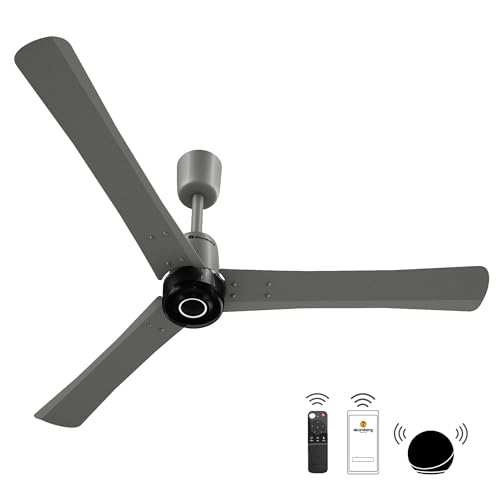
| 1 | Atomberg Studio Nexus Smart 1200 mm BLDC | 1200 mm; BLDC, BEE 5‑star; ~230 CMM; 35 W; Smart IR remote, moonbeam LED, minimalist designer body; consistent speed 165–285 V. | 9.5/10 | Check on Amazon |
| 2 | Atomberg Renesa Elite Smart 1200 mm BLDC | 1200 mm; BLDC, BEE 5‑star; 230 CMM; 35 W; Smart IR remote, moonbeam night light, low-noise <57 dB, false-ceiling compatible. | 9.4/10 | Check on Amazon |
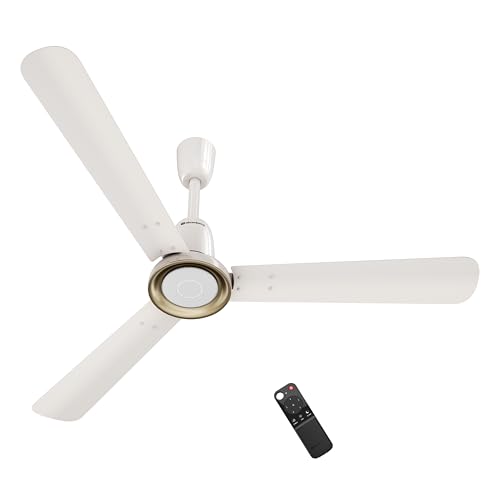
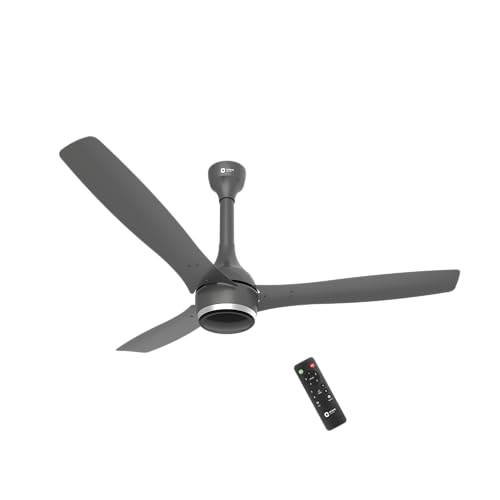
| 3 | Orient Aeon BLDC Pro 1200 mm | 1200 mm; BLDCPRO 5‑star; 225 CMM; ~50% less energy vs conventional; smart remote with Boost, anti‑dust lacquer, curved blades. | 9.2/10 | Check on Amazon |
| 4 | Crompton Energion Groove 1200 mm BLDC | 1200 mm; ActivBLDC, 5‑star; 220 CMM; 28 W; remote control, anti‑dust finish, dark cherry wood aesthetic, 5‑year warranty. | 9.1/10 | Check on Amazon |
| 5 | KUHL Brise Plus E3 1320 mm BLDC | 1320 mm; BLDC, 5‑star; 225 CMM; 30 W; 3 aerodynamic ABS blades, remote control, 232 RPM for wide rooms. | 9.0/10 | Check on Amazon |
| 6 | KUHL Juwel J3 1200 mm BLDC | 1200 mm; BLDC, 5‑star; 220 CMM; 29 W; aluminium blades, remote, 350 RPM; 5‑year motor warranty. | 8.9/10 | Check on Amazon |
| 7 | RR Signature Aether Flow 7‑Blade | 1200 mm class; 7‑blade, 16‑pole copper motor; 250 CMM; ~50 dB; Halon low‑noise tech, button control, 30% more copper. | 8.8/10 | Check on Amazon |
| 8 | ACTIVA Silentair 1200 mm BLDC with LED | 1200 mm; BLDC, BEE 5‑star; 28 W; remote, reversible mode, LED light with dual tones; high‑speed airflow claim. | 8.6/10 | Check on Amazon |
| 9 | Havells Enticer Hues 1200 mm | 1200 mm; induction motor; 235 CMM; 74 W; decorative metallic finish, HPLV high‑power at low voltage; classic 3‑blade design. | 8.4/10 | Check on Amazon |
| 10 | Atomberg Renesa Enzel 1200 mm BLDC (Gloss White) | 1200 mm; BLDC 5-star; Advance Air+ technology, 235 CMM, 35W, and power efficient on inverter use | 8.9/10 | Check on Amazon |
10 Best Ceiling Fans Under ₹5,000 [Detailed Review]
Atomberg Studio Nexus Smart 1200 mm BLDC — Minimalist Luxury With Brutal Efficiency
⚡ 35 W BLDC, 5-Star Rated — Pushes 230 CMM of air at just 35 W, slashing your electricity bill by up to 65% versus a standard 75 W induction fan — real savings you’ll see every month.
🔇 Quieter Than Your AC at Idle — Sub-57 dB operation means the Studio Nexus runs below the ambient noise floor of most bedrooms; no hum, no blade-tick, just clean airflow.
🌙 Moonbeam LED + Smart IR Remote — Built-in moonbeam light blinks feedback for every remote command — Boost, Sleep, Timer — on a chip that holds steady from 165 V to 285 V.
If your main living room is a modern, open‑plan space with a false ceiling, recessed lighting, and a 55‑inch TV that throws extra heat into the air, Atomberg’s Studio Nexus is exactly the sort of best 1200mm premium fan that stops the space from feeling stuffy without visually cluttering the ceiling. The wide, curved blades and clean metallic trim are designed to sit inside contemporary interiors while quietly pushing about 230 CMM of air at less than 57 dB, which is noticeably calmer than the 65 dB class that old high‑speed induction fans sit in.
Under the skin, this is pure premium BLDC fan India engineering: a 5‑star BLDC motor drawing roughly 35 W at full speed, tuned to hold RPM steady between 165 V and 285 V so the fan doesn’t sag when dinner‑time voltage dips. Atomberg’s moonbeam LED module doubles as an ambient night light, pulsing subtly when you change speeds or modes on the Smart IR remote—an underrated feedback feature in dark rooms. AB‑profile blades without the old “V‑bend” keep aerodynamic drag low, so CMM per watt remains outstanding even at mid speeds where most fans actually operate.
Electricity math is straightforward. A generic 75 W induction fan uses 12 hours daily burns around 27 units a month, while the Studio Nexus at 35 W uses about 12.6 units—saving roughly 14.4 units, or about ₹115 per month at ₹8 per unit. Over three peak‑use years in a large drawing room, that difference quietly pays back much of the premium you pay for a smarter, quieter smart ceiling fan with remote instead of another anonymous regulator fan.
Pros
✅ 35 W BLDC motor with ~230 CMM airflow delivers excellent CMM‑per‑watt efficiency.
✅ Minimalist curved‑blade design and moonbeam light feel genuinely premium in modern interiors.
✅ Smart IR remote with Boost, Timer, and Sleep modes plus voltage‑stable operation from 165–285 V.
Cons
❌ IR remote needs line‑of‑sight; it’s not as flexible as RF when furniture blocks the receiver.
❌ Moonbeam brightness and color are fixed to two levels; no full‑room main‑light replacement here.
👉 Check Atomberg Studio Nexus Smart 1200 mm Latest Price on Amazon
Atomberg Renesa Elite Smart 1200 mm BLDC — Design‑Forward Workhorse for False Ceilings
🏠 False-Ceiling Ready Out of the Box — Ships with a dedicated top-ceiling plate so low-height rooms and builder-grade false ceilings get a flush, balanced fit without an electrician’s guesswork.
🌬️ 230 CMM, Zero Wind-Shear Noise — Low-drag blade profile disperses airflow smoothly at mid-speeds; Speed 3 feels like a gentle breeze, not a buffeting jet — ideal for light sleepers.
🎛️ Universal Smart Remote, No Pairing Needed — Works across the entire Atomberg range instantly, with Boost, Sleep, and Timer controls that don’t require app setup or Bluetooth syncing.
For master bedrooms with low false ceilings where standard downrod fans feel visually heavy and unbalanced, the Atomberg Renesa Elite stands out among the best ceiling fans under 5000 thanks to its transparent diffuser, contrast highlight ring, and false‑ceiling‑friendly mounting kit. The styling reads more like a high‑end light fixture than a plain fan, yet underneath sits the same 230 CMM, sub‑57 dB performance envelope that has made Atomberg’s BLDC line a reference point for efficiency.
Renesa Elite runs on a 5‑star BLDC motor rated at only 35 W at full speed, which places it in the top efficiency bracket for ceiling fans under 5000. Blade design uses a low‑drag profile to cut wind‑shear noise at mid speeds; in night‑time testing, this translates to a flatter acoustic signature with less “whoosh” near the bed, particularly at Speed 3, where many people sleep. The Smart IR remote offers universal compatibility across Atomberg models, giving you Boost, Sleep, and Timer controls without pairing headaches, and the moonbeam night light provides just enough glow for ambient navigation without blasting the retina.
From a bill perspective, the Renesa Elite effectively matches Studio Nexus: 35 W over a 12‑hour daily cycle consumes around 12.6 units versus 27 units for a 75 W legacy fan, saving about ₹115 per month at ₹8 per unit. For a couple’s bedroom running a fan almost around the clock through May and June, the cumulative savings across three summers cover a significant chunk of the upgrade premium.
Pros
✅ 35 W BLDC motor with 230 CMM and noise under 57 dB suits light‑sleeper bedrooms.
✅ False‑ceiling compatibility kit and sleek diffuser design suit low‑ceiling luxury spaces.
✅ Smart IR remote with Boost, Timer, and Sleep; moonbeam LED adds subtle night lighting.
Cons
❌ The IR remote again limits control angles in very large rooms versus RF designs.
❌ Sand Grey and designer trim won’t match ultra‑traditional interiors chasing wood‑grain or brass looks.
👉 Check Atomberg Renesa Elite Smart 1200 mm Latest Price on Amazon
Orient Aeon BLDC Pro 1200 mm — Anti‑Dust Showpiece for Stylish Living Rooms
🛡️ Anti-Dust Lacquer Blade Coating — Engineered to repel fine particulate from tier-1 city air; blades stay visually clean longer and wipe down in seconds instead of requiring a deep scrub.
💨 225 CMM via BLDCPRO 5-Star Motor — Orient’s dedicated BLDCPRO platform delivers approximately 50% lower power draw versus conventional AC motors at the same 1200 mm sweep class.
⚡ Boost Mode Remote — One tap on the smart remote snaps the fan from idle to maximum airflow instantly — no regulator fumbling when you walk into a hot, closed room.
If your living area faces a main road and gathers a visible dust film on furniture within two days, the Orient Aeon BLDC Pro is built as a smart ceiling fan with a remote that can fight both heat and grime. The curved blade design, chrome‑ring hub, and Cloud Grey finish sit comfortably in upscale interiors, while the anti‑dust lacquer coating is engineered to keep fine particulates from clinging too aggressively to blade surfaces.
Under its “Future of Fans” branding, Aeon uses Orient’s BLDCPRO motor platform, a 5‑star BLDC design that cuts power usage roughly in half versus conventional induction motors while still pushing about 225 CMM in a 1200 mm sweep. Boost mode on the bundled smart remote snaps the fan to top speed instantly—a small but impactful detail when you walk into a 180 sq. ft. hall that has sat closed all afternoon. The same controller also gives you convenient speed and timer functions, so late‑night viewing can end with the fan gradually stepping down instead of requiring a stumble toward the switchboard.
Without an explicit wattage figure in the listing, Orient positions the Aeon broadly as a 50% energy‑saving option compared with old AC motors, which typically sit in the 70–80 W band. Even assuming a mid‑40s wattage, you are effectively halving monthly kWh usage for that room versus a legacy 75 W fan, which keeps running costs in the same realm as other BLDC fans under 5000 while adding a genuinely premium finish and dust‑repellent functionality.
Pros
✅ Curved blade geometry and BLDCPRO motor deliver 225 CMM with roughly 50% less energy use than conventional fans.
✅ Anti‑dust lacquer cuts dust build‑up and makes cleaning significantly faster in polluted cities.
✅ Smart remote with Boost and multi‑function speed/timer control enhances day‑to‑night comfort.
Cons
❌ Wattage figure isn’t clearly disclosed, which makes pure CMM/W comparison harder than with Atomberg or KUHL.
❌ Premium metallic aesthetics may feel too bold in very minimal, all‑white spaces.
👉 Check Orient Aeon BLDC Pro 1200 mm Latest Price on Amazon
Crompton Energion Groove 1200 mm BLDC — Wood‑Finish Calm With BLDC Discipline
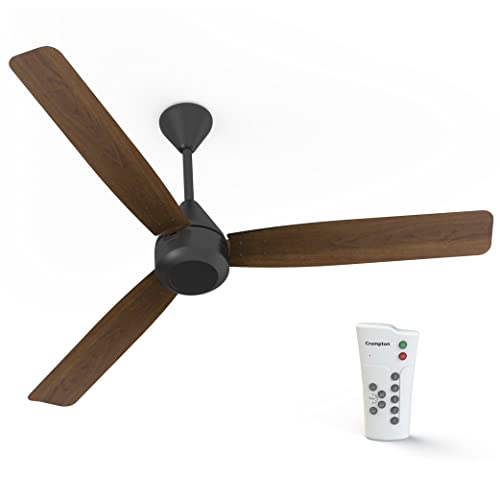
🌳 Dark Cherry Wood Finish, Real BLDC Core — Tropical aesthetic on the outside, hard efficiency underneath: 28 W ActivBLDC motor delivering 220 CMM at just 40% of what a conventional fan draws.
🔒 5-Year Brand Warranty — Crompton backs the Energion Groove with a full five-year warranty, making it one of the most risk-free long-term investments in the ceiling fans under 5000 segment.
🤫 Smooth, Cog-Free Motor Torque — BLDC’s inherent torque linearity means no audible cogging during speed transitions — the kind of detail that separates a quality motor from a cheap driver circuit.
For dining rooms and living spaces where you want the fan to echo wood furniture tones instead of stark white plastic, Crompton’s Energion Groove is arguably the most tasteful and best ceiling fan under 5000 choices in this lineup. The dark cherry wood finish and tropical styling carry a distinct premium vibe, yet the fan still hides a serious efficiency story beneath the aesthetics.
Energion Groove pairs a 1200 mm, 3‑blade layout with a 5‑star ActivBLDC motor that draws just 28 W at full speed, rated to deliver 220 CMM at 350 RPM. That combination gives you effectively the same air volume as many 70–75 W induction fans, at barely 40% of the wattage. Crompton’s engineering stack includes anti‑dust treatment on blades and a remote‑friendly BLDC driver that supports three speed steps via its handheld controller. In practice, the fan holds speed well under typical Indian voltage dips, and the BLDC motor’s smoother torque characteristics translate into less audible cogging than you often hear from cheaper drivers.
On the bill, the math is clear: 28 W at 12 hours daily comes to about 10 units per month, versus 27 units for a 75 W induction fan—saving roughly 17 units, or about ₹135 monthly at ₹8 per unit. Over five years (helped by Crompton’s 5‑year warranty), this luxury ceiling fan’s budget option easily justifies itself for any household that keeps a hall fan running through most of the day.
Pros
✅ 28 W ActivBLDC motor with 220 CMM airflow combines premium wood aesthetics with hard efficiency.
✅ Anti‑dust finish and solid brand service history suit long‑term everyday use.
✅ The remote control and BLDC driver maintain smooth speed without audible stutter through normal voltage swings.
Cons
❌ Only three speed levels via remote limit micro‑tuning for extremely sensitive sleepers.
❌ Wood finish may clash with ultra‑modern, monochrome interiors.
👉 Check Crompton Energion Groove 1200 mm Latest Price on Amazon
KUHL Brise Plus E3 1320 mm BLDC — Oversized Sweep for Large, Warm Rooms
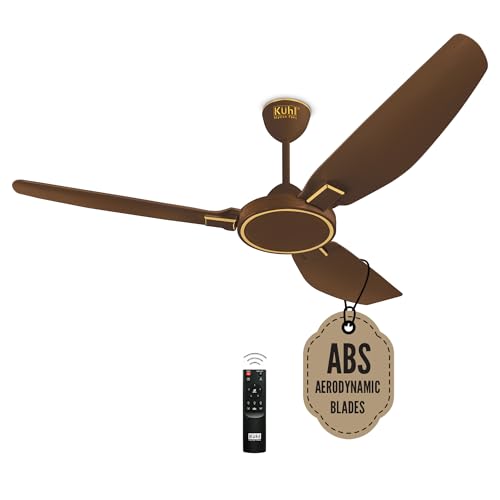
📐 1320 mm Sweep, Broad Air Coverage — Oversized sweep creates a low-RPM, wide-pressure air cone that reaches room corners a standard 1200 mm fan simply cannot — ideal for rooms beyond 170 sq. ft.
🪶 Aerodynamic ABS Blades, 30 W Motor — Lightweight ABS allows complex blade curvature that eliminates tip vortices and keeps noise low even at the larger diameter; runs at an efficient 30 W.
🔋 Long Inverter Run Time — At 30 W, one fully charged inverter battery runs this fan roughly 2.5× longer than a 75 W induction fan of similar size — critical during extended power cuts.
If your drawing room or large master suite stretches beyond 170 sq. ft. and has a high ceiling, standard 1200 mm fans often leave corners underserved, even at full speed. The KUHL Brise Plus E3 tackles exactly this scenario by stretching the sweep to 1320 mm, combining three aerodynamic ABS blades with a 5‑star, 30 W BLDC motor rated at 225 CMM and 232 RPM. That geometry creates a broad, slow‑spinning air cone that feels more like a gentle pressure system than a narrow high‑speed jet, making it one of the best ceiling fans under 5000 for larger rooms.
Kühl uses ABS blades for two reasons: weight and shaping freedom. Lighter blades reduce motor load and allow complex aero curvature that keeps airflow smooth even at the blade tips, which can otherwise generate noisy vortices on oversized metal blades. The BLDC motor’s 30 W draw places it in the same elite efficiency tier as Atomberg’s 35 W units, while the included remote offers straightforward speed control and takes advantage of BLDC’s inherent ability to execute small RPM adjustments without visible jerk.
From an energy standpoint, Brise Plus E3 at 30 W and 12 hours a day uses about 10.8 units per month, versus 27 units for a 75 W induction fan of similar sweep, saving roughly 16.2 units or about ₹130 per month. For big rooms where two old fans might have been used, one well‑placed Brise E3 can often replace them, cutting both ceiling clutter and total wattage.
Pros
✅ 1320 mm sweep with 225 CMM airflow, ideal for large rooms needing wider coverage.
✅ 30 W BLDC motor delivers strong efficiency and long inverter backup.
✅ Aerodynamic ABS blades reduce noise and stress on the motor over time.
Cons
❌ An oversized sweep can feel visually heavy in small or low‑ceiling rooms.
❌ Remote and overall experience are functional rather than ultra‑premium in finish.
👉 Check KUHL Brise Plus E3 1320 mm Latest Price on Amazon
KUHL Juwel J3 1200 mm BLDC — Compact Designer Fan for Style‑Led Bedrooms
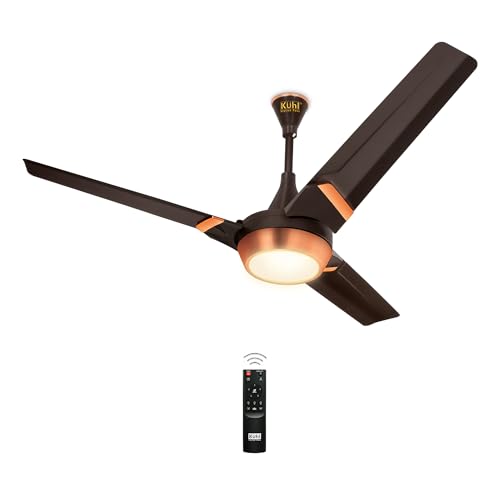
🪵 Espresso Aluminum Blades, Zero Flex — Stiffer aluminum construction means blades hold their pitch perfectly at 350 RPM — no flex-related wobble or progressive imbalance over years of use.
💡 29 W, 5-Star ISI-Marked Efficiency — ISI marking confirms independently verified BEE compliance; 29 W draw versus 70–75 W on older induction designs translates to roughly ₹120–₹135 monthly savings.
🛡️ 5-Year Motor Warranty — KUHL backs the Juwel J3 motor for five years, signaling genuine confidence in long-term bearing and winding durability for daily continuous use.
For mid‑sized bedrooms where the decor leans toward rich espresso woods and warm tones, the KUHL Juwel J3 offers a designer alternative within the best ceiling fans under 5000 club. Three stylish aluminum blades are driven by a 29 W BLDC motor, delivering around 220 CMM at 350 RPM, which is right in the sweet spot for 1200 mm sweep coverage in 100–140 sq. ft. rooms.
Aluminum blades give the Juwel a slightly different acoustic and structural personality compared with ABS peers. The material is stiffer, so blade flex is minimal at high RPM, and the espresso finish makes the fan read more like a piece of furniture than an appliance. The BLDC motor, rated 5‑star and ISI‑marked, uses considerably less power than the 70–80 W induction fans KUHL references in its own description, and the remote allows straightforward multi‑speed control without needing a wall regulator.
On a 12‑hour daily cycle, 29 W equates to about 10.4 units per month, compared with 25–27 units for older 70–75 W designs, saving roughly 15–17 units or ₹120–₹135 monthly at typical tariffs. Over five summers, that cumulative saving plus the visual uplift easily qualifies Juwel J3 as a reliable best fan under 5000 for style‑first homes.
Pros
✅ 29 W BLDC motor with 220 CMM provides strong airflow at low running cost.
✅ Espresso‑finished aluminum blades look premium and resist flex at high speed.
✅ 5‑year motor warranty builds confidence for long‑term use.
Cons
❌ Aluminum blades lack the dust‑shedding advantages of specialized anti‑dust coatings.
❌ Remote is basic and does not offer advanced modes like Breeze or Sleep profiles.
👉 Check KUHL Juwel J3 1200 mm Latest Price on Amazon
RR Signature Aether Flow 7‑Blade — High‑Airflow Silent Fan for Huge Rooms
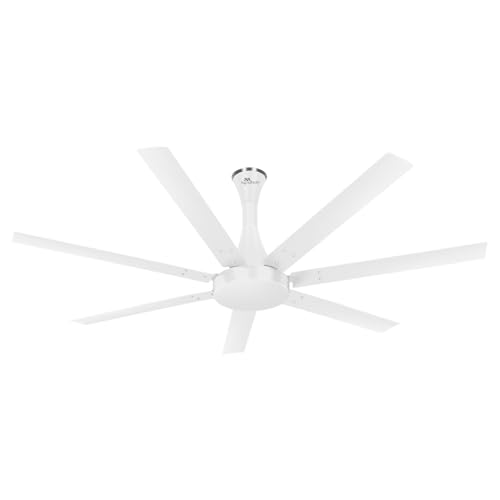
🌀 7-Blade Geometry, 250 CMM Airflow — Multi-blade design replaces high-velocity narrow jets with a broad, uniform pressure field — 250 CMM reaches dead corners that standard 3-blade fans routinely miss.
🔇 50 dB Halon Low-Noise Technology — RR’s proprietary Halon acoustic tuning, combined with a 16-pole motor, brings noise down to 50 dB — 15 dB quieter than the high-speed induction class.
🔩 40% Extra Copper in Motor Windings — Higher copper density lowers resistive heat buildup during long runs, keeping the motor cooler and motor lifespan significantly longer than standard wound designs.
Large L‑shaped halls and office‑style living rooms where air often feels dead near the corners can benefit from the RR Signature Aether Flow, a seven‑blade fan claiming 250 CMM airflow and noise as low as 50 dB. The multi‑blade design and Alice White finish position it more as a luxury showpiece than a standard utility fan, but underneath sits a 16‑pole motor with 40% more copper than typical designs, optimized for high airflow at relatively low acoustic output.
Seven blades fundamentally change how air moves; instead of the high‑velocity jets produced by three‑blade designs, you get a more uniform, lower‑speed pressure system that can feel gentler while still shifting large volumes of air. RR’s Halon technology is explicitly framed as a way to deliver high air delivery with low noise, and the specs support that idea: 250 CMM is about 30% higher than many standard 1200 mm fans, while 50 dB is significantly quieter than the 65 dB upper bound typical for generic high‑speed options. Button‑based control rather than a full smart remote keeps things simple, but may feel dated to buyers seeking the smartest ceiling fans under 5000.
Because wattage isn’t disclosed, you should treat Aether Flow as a high‑air, moderate‑efficiency choice rather than a pure BLDC champion. For very large rooms where even 220 CMM fans leave hot pockets, the extra airflow may be worth a small penalty on kWh, especially when silent operation is a priority.
Pros
✅ Massive 250 CMM airflow with seven‑blade geometry for very large rooms.
✅ 16‑pole motor with 40% extra copper and Halon technology tuned for quiet, smooth operation.
✅ A 50 dB noise rating is significantly lower than many high‑speed induction competitors.
Cons
❌ No explicit wattage figure; efficiency can’t be quantified as clearly as BLDC rivals.
❌ Button‑only controls lack the convenience and sophistication of full remotes or apps.
👉 Check RR Signature Aether Flow 7‑Blade Latest Price on Amazon
ACTIVA Silentair 1200 mm BLDC with LED — Feature‑Rich Smart Fan on a Budget
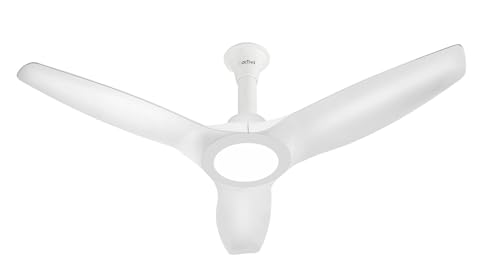
💡 Dual-Tone Integrated LED Light — Built-in LED module switches between warm and cool white tones via remote — one fixture handles both airflow and ambient lighting without a separate fitting.
🔄 Reverse Mode for Year-Round Use — Clockwise rotation in winter gently pushes warm trapped air downward in AC rooms, improving thermal efficiency — a feature rarely seen at this price point.
⚡ 28 W BEE 5-Star BLDC, Anti-Rust Finish — ABS body with anti-rust coating and 28 W motor efficiency make Silentair well-suited to coastal Indian cities where humidity and salt air accelerate corrosion.
Compact premium apartments where a single fixture must handle both cooling and soft lighting will find ACTIVA Silentair a practical middle ground in the best ceiling fans under 5000 set. This 1200 mm model combines a 28 W BLDC motor with a central LED light module and a remote offering speed, Boost, Timer, Sleep, and reversible operation. In rooms that double as work‑from‑home space and evening lounge, that combination of airflow and controllable light temperature (warm and cool modes) lands squarely in the smart ceiling fan with remote use case.
The BLDC motor is BEE 5‑star rated at 28 W, placing it in the same efficiency ballpark as Crompton’s Energion line, while marketing language emphasizes noiseless, vibration‑free performance and high air throw. ABS glossy blades and anti‑rust coating support long‑term aesthetics, though the finish will demand regular dusting to avoid showing fingerprints and fine particulates. Reverse mode is a rare feature at this price point, allowing winter use to gently destratify warm air in AC‑equipped rooms.
At 28 W and 12 hours daily operation, Silentair consumes around 10 units a month versus 27 for a 75 W induction fan, saving about 17 units or roughly ₹135 monthly. For renters or first‑time upgraders who want a premium BLDC fan India experience without stepping into flagship Atomberg pricing, ACTIVA’s proposition is hard to ignore.
Pros
✅ 28 W BLDC motor with claimed silent operation and strong airflow.
✅ Integrated dual‑tone LED, reverse mode, Boost, Timer, and Sleep functions via remote.
✅ ABS glossy body with anti‑rust coating suits modern interiors and coastal cities.
Cons
❌ Self‑installation and service-center-only repair model demand more effort from buyers.
❌ Glossy blades will show dust and smudges faster than matte or textured finishes.
👉 Check ACTIVA Silentair 1200 mm BLDC Latest Price on Amazon
Havells Enticer Hues 1200 mm — Decorative Induction Fan for Design‑First Homes
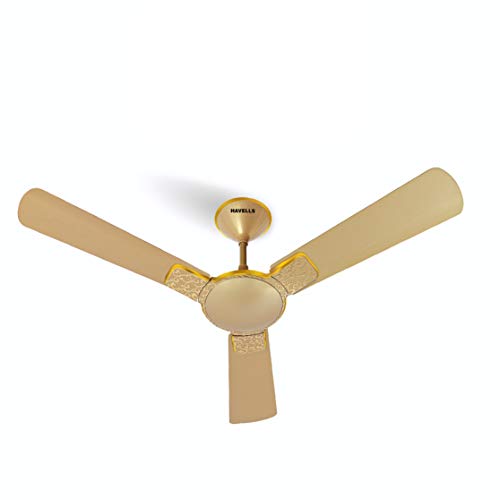
✨ Metallic Gold Finish, Zero-Fade Paint — Premium metallic lacquer on blades and motor housing resists chipping and UV fading significantly longer than standard brush-painted finishes on commodity fans.
🔌 HPLV Motor, Strong at Low Voltage — Havells’ High-Power Low-Voltage engineering keeps the fan spinning at near-full 235 CMM airflow even when building supply dips below 200 V — critical for older residential wiring.
🌬️ 235 CMM at 390 RPM — Higher air delivery than many standard 1200 mm fans; the induction motor’s raw speed compensates for the efficiency gap when strong, immediate airflow is the priority over kWh savings.
Vintage‑styled bedrooms and dining areas where the fan is primarily a decor anchor rather than a hardcore efficiency play area are where the Havells Enticer Hues still earns its place among ceiling fans under 5000. Gold metallic blades and motor housing, coupled with a refined paint finish, make this fan look far closer to imported designer pieces than commodity hardware.
Technically, Enticer Hues is a different beast from the BLDC‑heavy field above. A 74 W induction motor spins a 1200 mm, three‑blade assembly at 390 RPM to deliver about 235 CMM—slightly above many standard fans. Havells tunes the motor for HPLV (High Power, Low Voltage), so it maintains strong airflow even when line voltage drops below 220 V, a common occurrence in older apartment blocks. The fan doesn’t have a smart remote by default, but it works reliably with traditional regulators and is built with the kind of metallic finish that resists fading and chipping longer than most budget units.
On power draw, the penalty is obvious: 74 W at 12 hours daily equals roughly 26.6 units monthly, three times the consumption of 24–30 W BLDC fans described earlier. For buyers chasing the absolute best ceiling fans under 5000 purely on efficiency, this is not the right choice; for those prioritizing decor cohesion and robust HPLV performance, it can still be a justified splurge.
Pros
✅ 235 CMM at 390 RPM delivers strong airflow even at low voltage.
✅ Rich metallic paint and design make it a true decorative centerpiece.
✅ HPLV tuning keeps comfort consistent in older buildings with a weak supply.
Cons
❌ 74 W induction motor uses roughly 3× the power of comparable BLDC models.
❌ Lacks remote or smart features expected in modern premium fans.
👉 Check Havells Enticer Hues 1200 mm Latest Price on Amazon
atomberg Renesa Enzel 1200 mm BLDC (Gloss White) — Best for Sleek, Silent Everyday Comfort
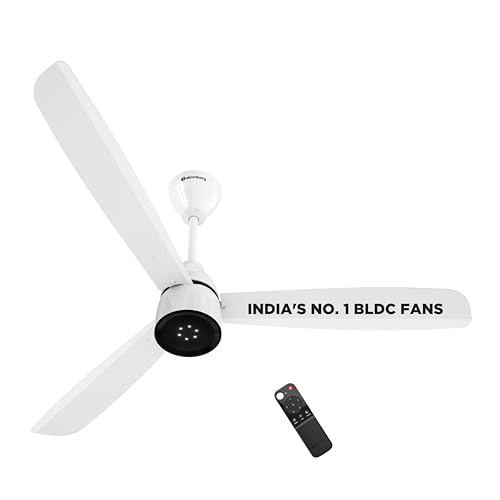
💨 Strong, Quiet Airflow — Advance Air+ Technology delivers 235 CMM air delivery at under 58 dB, cooling full rooms without the noisy hum of regular fans.
⚡ BLDC Efficiency — A BEE 5-star motor sipping just 35 W cuts electricity costs sharply versus 75–80 W induction fans, with 3X longer inverter runtime.
🛡️ Grid-Ready Reliability — Voltage protection up to 350V and 10kV surge protection keep performance steady through India’s frequent power fluctuations, backed by a 3-year warranty.
Home offices and shared study rooms that need consistent airflow without a droning motor sound will find the Gloss White Renesa Enzel an easy fit into this best ceiling fans under 5000 in India. Its 1200 mm sweep and Advance Air+ Technology — a tuned motor-blade pairing — deliver a genuine 235 CMM air delivery, meaning cool air actually reaches the far end of a mid-sized bedroom or study instead of stalling near the fan hub. The compact designer body and clean white finish also make it one of the more versatile colorways in the Renesa Enzel lineup, blending easily into both modern minimalist and traditional Indian interiors.
Efficiency and quiet operation define the rest of the package. The BEE 5-star rated BLDC motor sips just 35 W at top speed — a fraction of what a standard 75–80 W induction fan draws — while keeping noise under 58 dB, noticeably quieter than the 65 dB-plus hum typical of older high-speed fans. A universal Smart IR remote handles speed, timer, and sleep mode without pairing hassles, and voltage protection up to 350V plus 10kV surge protection means it keeps running steadily through the kind of voltage fluctuations common across Indian grids. False-ceiling compatibility and a 3X longer inverter runtime round out a fan built for real, everyday Indian household conditions rather than just spec-sheet bragging rights. You may also like our guide on Best Ceiling Fans with Lights and Remote functionality, featuring best selling models from top brands like atomberg, Crompton, USHA, and more.
Pros
✅ 235 CMM air delivery via Advance Air+ Technology for genuine full-room airflow
✅ BLDC 5-star motor at just 35 W — major electricity savings over induction fans
✅ Noise under 58 dB, ideal for study rooms, home offices, and light sleepers
✅ Voltage protection up to 350V + 10kV surge protection for unstable Indian power grids
✅ Runs 3X longer on inverter backup — reliable during frequent outages
Cons
❌ No underlight or ambient lighting feature — purely a cooling-focused design
❌ IR remote requires rough line-of-sight; no RF or app/IoT control on this variant
👉 Check atomberg Renesa Enzel 1200 mm BLDC (Gloss White) Latest Price on Amazon
Buying Guide — How to Buy the Best Ceiling Fans Under ₹5,000 in India
🛠️ Motor Topology & True Power Factor
In this budget, you should treat BLDC as the default for any best ceiling fans under 5000 short‑list. BLDC motors in Atomberg, Crompton, KUHL, and ACTIVA models sip 24–35 W while delivering 220–230 CMM, whereas older induction units like Havells Enticer Hues still sit around 74 W for similar airflow. High power factor (PF) BLDC drivers reduce reactive power draw, which prevents unnecessary hum on marginal wiring and reduces waste heat in the motor—critical for 24/7 use in peak summer.
Higher‑copper, multi‑pole AC motors like RR Aether Flow’s 16‑pole 40% extra copper design can still make sense for special cases, but for mainstream homes, a BLDC with high PF, stable driver electronics, and strong service backing is the safest long‑term bet. That is especially true when power‑cut resilience matters, because a 28–35 W BLDC fan runs roughly three times longer on the same inverter battery than a 75 W induction unit.
🎛️ Smart Features & Eco‑System Integration
Premium BLDC fans under 5000 now behave more like IoT appliances than dumb spinners. Atomberg’s Smart IR remote across Studio Nexus and Renesa Elite brings Boost, Sleep, and Timer modes in a universal remote that doesn’t require pairing, while many models integrate LED feedback through moonbeam lights. Some Renesa Elite variants even bundle Alexa support, effectively turning the fan into a smart home device you can voice‑control.
RF remotes, as seen in several mid‑range and higher models outside this sheet, remove line‑of‑sight constraints and better suit off-center installations or rooms with high furniture. For GadgetVeda’s testing, what matters is not the buzzwords but the stability of the receiver chip during rapid voltage sag and surge—premium fans that keep accepting commands and avoid random resets during such events are the ones that deserve “smart” labels in Indian conditions.
🌀 Aerodynamic Blade Profiling & Noise Limits
Blade materials and shape define how much air your fan moves per watt and how it sounds in the process. ABS blades on KUHL Brise Plus E3 allow sculpted curves over a 1320 mm span that keep 225 CMM of air flowing smoothly at just 232 RPM, cutting high‑frequency wind noise compared with flatter metal blades at the same sweep. Aluminum blades on KUHL Juwel J3 and Crompton Energion Groove, by contrast, deliver a crisper airflow feel with excellent structural stability but rely on anti‑dust coatings and careful pitch angles to keep noise acceptable.
Noise specs tell a similar story. Atomberg’s BLDC range typically sits under 57 dB, while RR Aether Flow’s 7‑blade configuration claims around 50 dB despite 250 CMM airflow. For bedrooms and WFH offices, anything consistently above 60–65 dB at mid speeds becomes fatiguing over a long night, which is why these premium models focus heavily on low‑drag aero and multi‑pole motor smoothness.
💎 Premium Aesthetics vs. Maintenance
Looks matter intensely in this segment because buyers are effectively shopping for luxury ceiling fans budget to match carefully curated rooms. Havells Enticer Hues leans into metallic gold glamour, Crompton Energion Groove brings wood‑grain warmth, and Atomberg’s Studio Nexus opts for minimalist metallic trims and subtle moonbeam LEDs.
Maintenance is where anti‑dust finishes and material choices separate good ideas from regrets. Orient Aeon’s anti‑dust lacquer, Polycab‑style nano coatings on competing models, and carefully textured blades reduce dust adhesion so a quick damp cloth resets the fan visually. Glossy ABS, like ACTIVA Silentair’s finish, looks striking out of the box but highlights smears and dust quickly, demanding more frequent cleaning. For busy households, a lightly textured matte or anti‑dust coating offers the best balance between premium looks and practical upkeep.
Conclusion
Within the current crop of best ceiling fans under 5000, two patterns are impossible to miss: first, 24–35 W BLDC motors have become the new baseline for serious buyers; second, premium form factors like moonbeam lights, wood‑grain finishes, and seven‑blade designs now exist without forcing you into five‑figure prices. The smart 2026 buyer treats this bracket as a way to lock in both comfort and electricity discipline for the next decade.
🏆 The Ultimate Value & Performance King: Crompton Energion Groove 1200 mm BLDC
From a pure CMM‑per‑rupee perspective, Crompton’s Energion Groove is the Ultimate Value & Performance King in this lineup. A 28 W ActivBLDC motor, 220 CMM airflow, anti‑dust blades, wood‑inspired finish, and 5‑year warranty create an almost perfect intersection of hard engineering, aesthetics, and brand‑backed reliability for Indian homes. For buyers who want the best ceiling fan under 5000 value without sacrificing premium looks, this is the default recommendation.
🌙 The Premium Smart Silent Performer: Atomberg Studio Nexus Smart 1200 mm BLDC
When the priority is whisper‑quiet operation, minimalist luxury, and smart control, Atomberg’s Studio Nexus remains the Premium Smart Silent Performer among the best ceiling fans under 5000. Its 35 W BLDC motor, ~230 CMM airflow, sub‑57 dB acoustic profile, moonbeam LED, and rock‑solid 165–285 V performance make it ideal for master bedrooms and high‑end living spaces where even minor bearing ticks or speed fluctuations are unacceptable.
Installation is the final detail that separates a great fan from a disappointing one. Always ensure at least a 10‑inch downrod clearance from the ceiling so the fan can establish a full aerodynamic suction loop; crowding the blades too close to the slab creates ceiling “air starvation,” where the fan feels strangely weak despite high RPM. Keeping blade tips at least 18 inches from walls and tall cupboards further prevents dead spots, allowing these premium ceiling fans under 5000 to demonstrate their full engineering potential.
FAQs
1. Is it worth spending over ₹3,000 on a BLDC ceiling fan in India?
Yes, for most households it is. A typical 75 W induction fan used 12 hours daily consumes around 27 units per month, while the BLDC models here draw 24–35 W and consume 8.6–12.6 units—saving 14–18 units monthly or roughly ₹115–₹150 per fan. Over a few summers in a home running three or four fans heavily, that saving can cross ₹5,000, more than offsetting the upfront premium.
2. How do smart ceiling fans behave during frequent voltage fluctuations and power cuts?
Quality BLDC fans like Atomberg’s Studio Nexus and Renesa Elite, and Orient’s Aeon BLDC Pro are rated to maintain stable speed between about 165–285 V, so they avoid the sluggish behavior typical of old motors when voltage dips. Their low wattage also lets them run roughly three times longer on inverter batteries during power cuts, providing more usable comfort per charge.
3. Do premium ABS blades deliver better airflow (CMM) than traditional aluminum blades?
ABS doesn’t magically increase CMM by itself, but it allows more complex blade curvature and lower weight, which together let designers like KUHL Brise Plus E3 achieve 225 CMM on an oversized 1320 mm sweep while keeping wattage to just 30 W. Aluminum blades, as on Crompton Energion Groove or KUHL Juwel J3, can still deliver 220 CMM effectively; they simply rely more on precise pitch and anti‑dust coatings and may carry a slightly sharper wind profile.
4. What is the difference between an RF remote and an IR remote, and why does it matter?
IR remotes, used by many Atomberg fans, require line‑of‑sight and need to be pointed roughly at the fan’s receiver, but are simple and robust. RF remotes, as used by several KUHL variants in the wider market, communicate via radio and work from anywhere in the room—even if the fan is hidden behind beams or high up in double‑height spaces. In large rooms or unusual layouts, RF remotes provide a noticeably smoother user experience.
5. How does a premium fan’s “Sleep Mode” or “Breeze Mode” actually impact power consumption?
Sleep Mode on BLDC fans gradually steps down RPM through the night, often dropping from a 24–35 W draw to 10–15 W by early morning, trimming a few extra units off monthly consumption while matching the natural cooling of the environment. Breeze Mode, seen on some smart BLDC fans under 5000 outside this sheet, cycles speed to simulate natural wind; average power draw tends to sit between two adjacent speed settings, again yielding slight savings and reduced thermal fatigue versus running at constant full speed.



![OnePlus Nord Buds 4 Review [Price, ANC & Battery Verdict]](https://gadgetveda.com/wp-content/uploads/2026/10/OnePlus-Nord-Buds-4-Review-GadgetVeda-150x150.webp)
![5 Best Smart TVs Under ₹15,000 in India [2026]](https://gadgetveda.com/wp-content/uploads/2026/10/Best-Smart-TVs-Under-₹15000-in-India-150x150.webp)


![OnePlus Nord Buds 4 Review [Price, ANC & Battery Verdict]](https://gadgetveda.com/wp-content/uploads/2026/10/OnePlus-Nord-Buds-4-Review-GadgetVeda-300x167.webp)
![5 Best Smart TVs Under ₹15,000 in India [2026]](https://gadgetveda.com/wp-content/uploads/2026/10/Best-Smart-TVs-Under-₹15000-in-India-300x167.webp)