


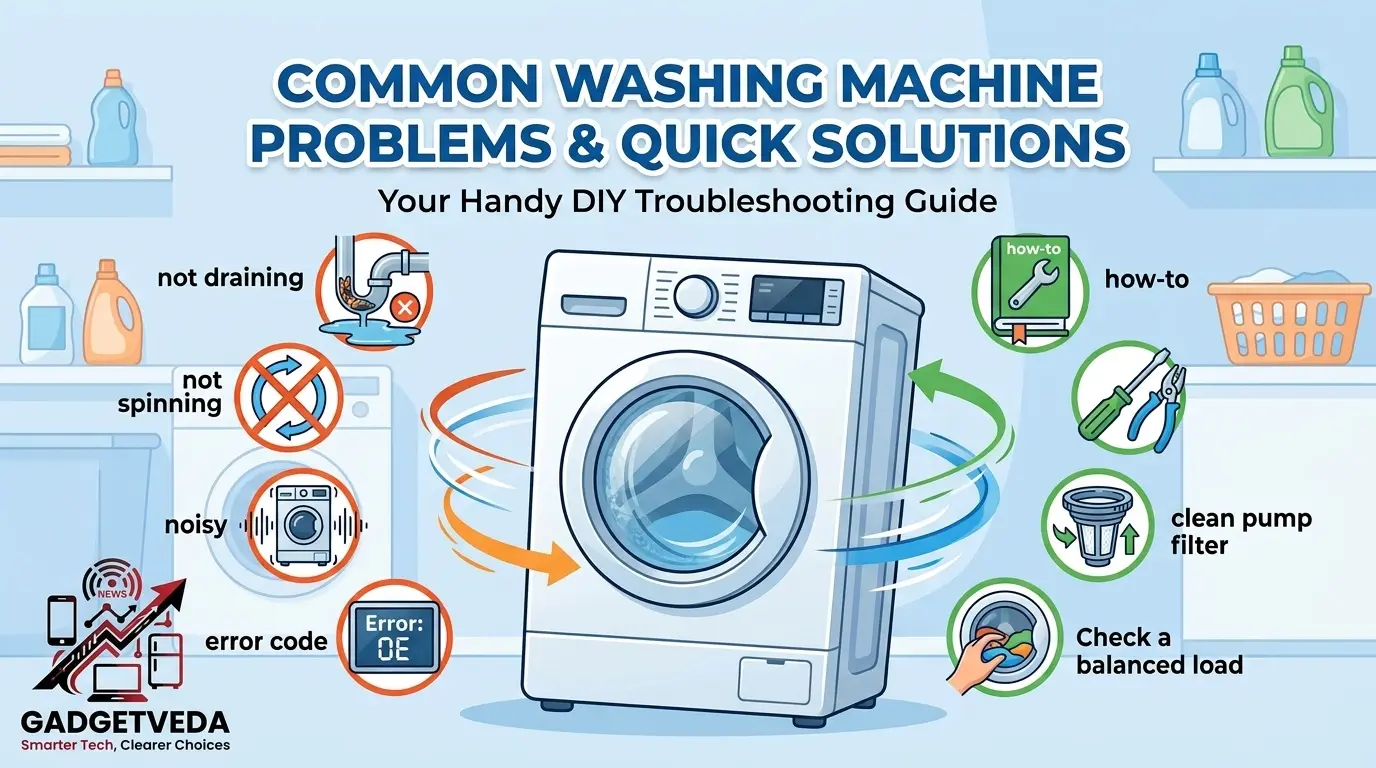
Every household with a washing machine eventually runs into a problem that seems to appear out of nowhere — a machine that won’t drain, a drum that refuses to spin, or a cryptic error code flashing on the display. At GadgetVeda, we hear about these issues constantly from our readers, and the good news is that most of them have simple, predictable causes.
This guide walks you through the 10 most common washing machine problems Indian households face, along with quick fixes you can try yourself before calling in a technician. Whether you own a top-load or front-load washing machine, the troubleshooting logic below will help you understand what’s actually going wrong and how to fix it efficiently.
Also, explore on GadgetVeda:
👉 Best Washing Machines Under ₹30,000 in India — Heavy-duty top load and premium front load options from top washing machine brands like LG & Samsung.
👉 Best Washing Machines Under ₹25,000 in India — High-performance, reliable top load washing machine for modern households.
👉 Best Washing Machines Under ₹20,000 in India — Explore fully automatic top load washing machines with better capacity and wash quality.
👉 Best Washing Machines Under ₹15,000 in India — Mid-level fully automatic options for small families looking for quick wash features and superior build quality.
👉 Best Washing Machines Under ₹10,000 in India — Entry-level semi-automatic options with reliable performance and easy-to-use functionality.
10 Common Washing Machine Problems & Quick Solutions
1. Washing Machine Won’t Start
This is one of the most frequent complaints we come across, and thankfully, one of the easiest to diagnose. In most cases, the culprit is something surprisingly basic.
Common causes:
→ Loose power connection or a tripped circuit breaker
→ Door or lid not closing properly, preventing the safety lock from engaging
→ Water supply valve turned off, which some models treat as a start-blocking fault
Quick fix: Check that the plug is firmly in the socket and the switchboard isn’t tripped. Close the door firmly until you hear the lock click, and confirm the water tap connected to the machine is fully open. If the machine still won’t start after these checks, the issue may be a faulty door lock mechanism or control board, which typically needs professional attention.
2. Washer Not Draining
A washer not draining is another common washing machine problem that the majority of Indian households face over time of the use of the machine, and it affects both top load and front load models equally. However, the solutions for this top load and front load washing machine problem are quite easy to fix.
Common causes:
→ Clogged drain hose or drain pump filter
→ Kinked or improperly positioned drain hose
→ Foreign objects like coins or small clothing accessories blocking the pump
Quick fix: Switch off and unplug the machine, then check the drain hose for kinks or blockages. Most front load machines have a small pump filter located near the bottom front panel — open it carefully over a shallow tray, as trapped water will spill out, and clean out any lint, hair, or debris. For top load machines, inspect the drain pump inlet for similar blockages. If water still won’t drain after cleaning, the pump motor itself may have failed and will need replacement by a technician.
3. Machine Not Spinning
A washer not spinning properly usually means clothes come out heavier and wetter than expected, which extends drying time significantly. So, don’t panic and instead look for these common causes first.
Common causes:
→ Unbalanced load inside the drum
→ Faulty lid switch (top load) or door lock sensor (front load)
→ Worn-out drive belt or motor issue
Quick fix: Open the machine and redistribute the load evenly — an unbalanced load is the single most common reason spinning fails, and simply rearranging clothes solves it more often than people expect. If redistribution doesn’t help, check whether the lid or door is closing and locking securely, since most machines refuse to spin as a safety measure if this sensor isn’t engaged. Persistent spin failure despite a balanced, properly closed load usually points to a belt or motor problem requiring professional repair.
4. Excessive Vibration or Machine Shaking
If your washing machine shakes violently or “walks” across the floor during the spin cycle, this isn’t just annoying — it can cause long-term damage to internal components. It is one of the most common washing machine problems in entry-level semi-automatic models.
Common causes:
→ Machine not leveled properly on the floor
→ Overloading the drum beyond its rated capacity
→ Worn suspension rods or shock absorbers (more common in older machines)
Quick fix: Use a spirit level to check if the machine sits evenly, and adjust the leveling feet at the base until it’s stable in all directions. Avoid overloading — check your machine’s rated capacity and stick to it, since overloaded drums create the imbalance that causes violent shaking. If the machine is level and correctly loaded but still vibrates excessively, the suspension system likely needs a technician’s inspection.
5. Water Leaking From the Machine
Leaks are messy, potentially damaging to your flooring, and one of the top load washing machine problems and solutions queries we receive from readers with older units. If your machine is old and not working efficiently, it can be the right time to switch to a brand new option with better build quality and energy efficiency. You can also look for our expert buying guide on Best Washing Machines Under 25000 in India, covering best value for money and heavy-duty top-load models.
Common causes:
→ Loose or cracked water inlet and outlet hoses
→ Damaged door seal or gasket (mainly in front-load machines)
→ Overloading, which causes excess water to escape during the wash cycle
Quick fix: Inspect all visible hose connections at the back of the machine and tighten any loose fittings. For front load machines, run your hand along the rubber door seal to feel for cracks, tears, or trapped debris that prevents a proper seal — cleaning this gasket regularly also reduces leak risk. If the leak is coming from underneath the machine rather than the front or back, the internal water pump may have a hole or crack and will need professional replacement.
6. Loud or Unusual Noises During Operation
A washing machine making banging, grinding, or rattling noises is trying to tell you something specific, and identifying the type of noise helps narrow down the cause quickly. This washing machine problem may look small but can have bigger consequences; therefore, first check clothes carefully before putting them inside the washer. Also, look for the below-mentioned causes to figure out this issue.
Common causes:
→ Foreign objects like coins, buttons, or hairpins trapped inside the drum
→ Worn-out drum bearings, common in machines several years old
→ Loose or damaged drive belt
Quick fix: Pause the cycle and check the drum, pockets of clothing, and the base of the machine for small trapped objects — this is genuinely the most common cause of unexpected noise. If the noise specifically occurs during the spin cycle and sounds like grinding metal, worn drum bearings are the likely cause, and this typically requires a technician since bearing replacement involves partially disassembling the drum.
7. Clothes Coming Out Dirty or with Detergent Residue
If your clothes emerge from a wash cycle still carrying stains, soap residue, or a general lack of freshness, the machine itself is rarely broken — this is almost always a usage-pattern issue. You should always follow the recommended detergent quantity per bucket so you don’t face this issue.
Common causes:
→ Using too much or too little detergent for the load size and water hardness
→ Overloading the drum, which prevents proper agitation and rinsing
→ Detergent dispenser tray clogged with old residue
Quick fix: Follow the detergent dosage guidelines on the pack relative to your load size, and reduce the quantity if you notice excessive foam during the cycle. Clean the detergent dispenser tray periodically, as dried residue can block proper dispensing over time. Avoid packing the drum too tightly — clothes need room to move freely against water and detergent for effective cleaning.
8. Foul Odor From the Washing Machine
A persistently smelly washing machine is one of the most common washing machine troubleshooting concerns, especially in front-load machines used in humid Indian conditions. This issue may arise after months of using your washing machine without cleaning it properly.
Common causes:
→ Mould and mildew buildup inside the drum and rubber door seal
→ Stagnant water trapped in the detergent drawer or drain hose
→ Keeping the door closed immediately after each wash, trapping moisture inside
Quick fix: Run an empty hot water cycle with a cup of white vinegar or a dedicated washing machine cleaner once every month to break down mould buildup. Wipe down the rubber door seal after each wash to remove trapped moisture, and leave the door slightly open between washes to let the drum air out completely. This simple habit prevents the vast majority of odor complaints we see from readers.
9. Machine Overheating or Shutting Down Mid-Cycle
Some machines shut down unexpectedly partway through a wash, which understandably concerns owners who assume a major fault has occurred. When users buy a machine under capacity and use it several times during the wash, the washer may start overheating or shutting down. So, always determine your user requirements before buying any washing machine in India. If you are a small family and need a reliable option, you can consider exploring our guide on Best Washing Machines Under 15000.
Common causes:
→ Continuous back-to-back use without rest, causing the motor to overheat
→ Voltage fluctuations common in many Indian households during peak load hours
→ Overloading, which forces the motor to work harder than designed
Quick fix: Allow the machine a rest period of 20 to 30 minutes between consecutive wash cycles, particularly during heavy laundry days. If voltage fluctuation is a known issue in your area, using a stabilizer designed for washing machines can prevent shutdowns triggered by unstable power supply. Reducing load size closer to the manufacturer’s recommended capacity also reduces strain on the motor significantly.
10. Error Codes on the Display Panel
Modern washing machines, especially front-load models, display error codes rather than vague fault indicators — a helpful feature once you understand what triggers them. Understanding error codes India buyers commonly encounter helps you troubleshoot faster without guesswork.
Common causes:
→ Door not closing or locking properly (commonly a door-related error code)
→ Water supply issues, either low pressure or the tap being closed (a water-inlet-related code)
→ Drainage errors triggered by the same blockage issues covered earlier in this guide
Quick fix: Always keep your machine’s user manual handy, either physically or as a saved PDF, since error code meanings vary between brands and models. For most error codes, a simple reset — unplugging the machine for two to three minutes before restarting — resolves temporary sensor glitches. If the same error code reappears consistently after a reset, this points to an actual hardware fault requiring professional diagnosis rather than a software glitch.
Top Load vs Front Load: Are the Problems Different?
While the underlying causes often overlap, a few problems are more specific to one type of machine.
Top load washing machine problems and solutions tend to center more around agitator issues, lid switch failures, and load balancing, since top load machines rely on a central agitator or impeller mechanism.
Front load washing machine problems and solutions more frequently involve door seal leaks, drain pump filter blockages, and mould-related odour issues, largely because front load machines use a sealed drum design and lower water levels, which makes ventilation and drainage maintenance more critical.
Understanding which category your issue falls into helps you troubleshoot faster and know exactly where to look first.
When to Call a Professional Instead of DIY
Not every washing machine problem can or should be fixed at home. You should contact a qualified technician when:
→ The issue involves the motor, control board, or internal electrical wiring
→ A part clearly needs replacement, such as a drum bearing, drive belt, or water pump
→ The same error code or fault recurs repeatedly despite resets and basic troubleshooting
→ Your machine is still under warranty, since DIY repairs can void manufacturer coverage
Attempting internal repairs without proper knowledge can worsen the problem or create safety risks, particularly with electrical components. When in doubt, the small cost of a service visit is almost always worth avoiding a bigger repair bill later.
Conclusion
Most common washing machine problems in India come down to a handful of predictable causes — blocked drains, unbalanced loads, worn seals, or simple maintenance neglect. Understanding these patterns means you can resolve the majority of issues yourself in minutes, without waiting days for a technician visit. For anything involving the motor, electrical components, or recurring hardware faults, professional repair remains the safer and more reliable path.
At GadgetVeda, we’re committed to helping you get the most out of every appliance you own, one practical guide at a time. Keep this checklist handy the next time your washing machine acts up, and you’ll likely have it running smoothly again before your next laundry day.



![OnePlus Nord Buds 4 Review [Price, ANC & Battery Verdict]](https://gadgetveda.com/wp-content/uploads/2026/10/OnePlus-Nord-Buds-4-Review-GadgetVeda-150x150.webp)

![5 Best Smart TVs Under ₹15,000 in India [2026]](https://gadgetveda.com/wp-content/uploads/2026/10/Best-Smart-TVs-Under-₹15000-in-India-150x150.webp)

![OnePlus Nord Buds 4 Review [Price, ANC & Battery Verdict]](https://gadgetveda.com/wp-content/uploads/2026/10/OnePlus-Nord-Buds-4-Review-GadgetVeda-300x167.webp)

![5 Best Smart TVs Under ₹15,000 in India [2026]](https://gadgetveda.com/wp-content/uploads/2026/10/Best-Smart-TVs-Under-₹15000-in-India-300x167.webp)