


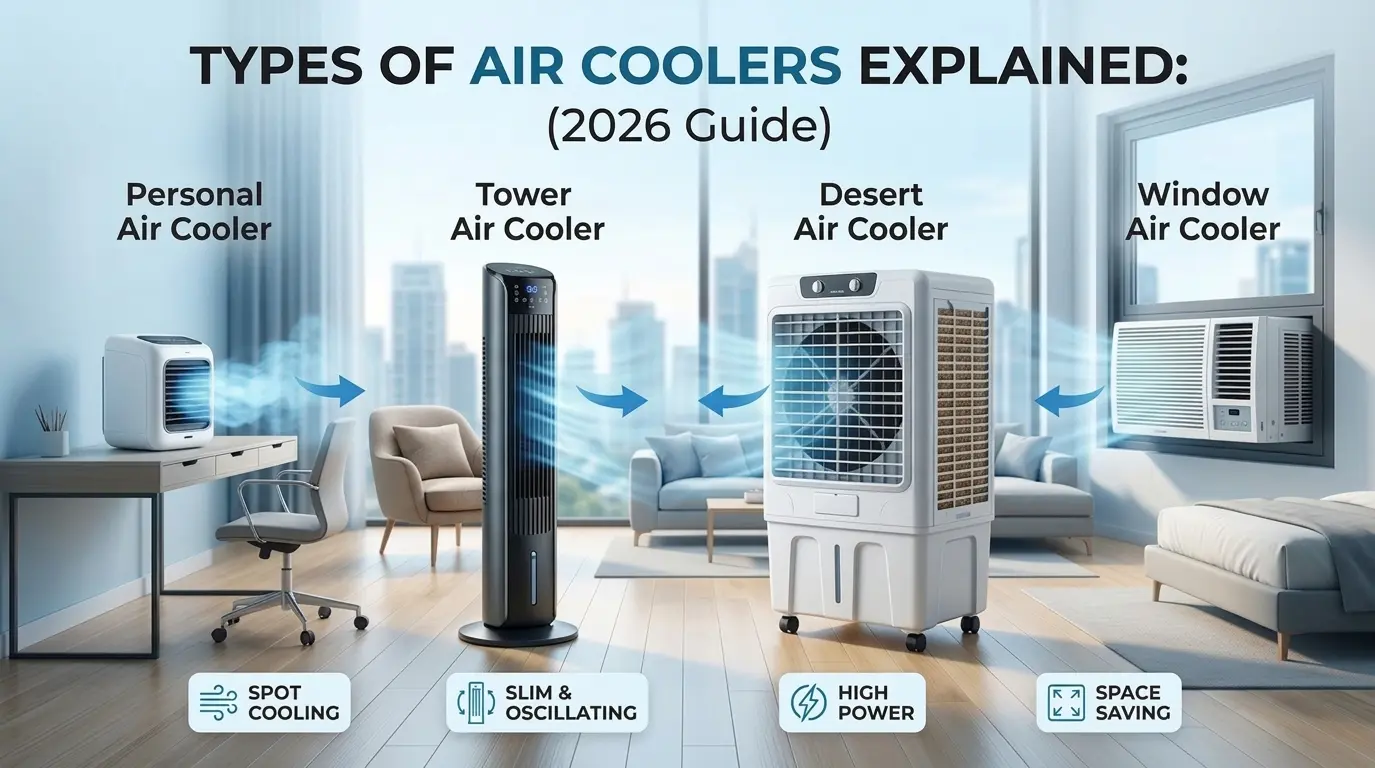
If you live in India, you already know that from April to June, the real battle is not on social media—it is with the heat inside your home. For many households, air coolers (evaporative coolers) hit the sweet spot between comfort and affordability, especially in hot and dry or composite climates. A typical cooler uses just 80–300 watts, while an AC of similar coverage can draw 1,000–2,000+ watts, which is why coolers can consume up to 80–90% less electricity than room air conditioners.
At GadgetVeda, our discussions focus on helping Indian buyers go beyond just “more air, bigger tank” and instead understand which air cooler types match which rooms, climates, and budgets. This guide breaks down the four major air cooler types—personal, tower, desert, and window—so you can quickly see their working, ideal room size, power use, pros and cons, and how they compare to each other.
How Evaporative Air Coolers Work?
All the types of air coolers you see in stores—personal, tower, desert, window—are based on the same evaporative principle.
💨 A fan pulls in warm indoor or outdoor air.
💧 The air passes through water‑soaked cooling pads.
🔥→❄️ As water evaporates from the pads, it removes heat from the air (latent heat of evaporation).
🌀 The fan then blows this cooler, more humid air into your room.
Because they move air and water instead of running a compressor, evaporative coolers typically use a fraction of the energy of ACs. Research on Indian climates shows that evaporative systems can cut cooling power needs by around 55–60% compared with conventional air conditioners when delivering similar comfort levels in hot‑dry and composite zones like Delhi and Jodhpur.
However, humidity is the catch:
✅ At relative humidity below ~40%, air coolers are highly effective and can give a strong temperature drop.
⚠️ Between 40–60% humidity, they still work, but cooling is less dramatic and the room can feel more humid.
❌ Above ~60–70% humidity, especially during monsoon or in coastal cities, simple coolers feel “sticky” and may barely cool.
So choosing the right air cooler type is as much about your climate and ventilation as it is about tank size or brand.
4 Types of Air Coolers in India [Quick Overview]
Before we dive into each category, here’s a high‑level view of personal vs tower vs desert vs window coolers.
| Type | Typical Room Size | Climate Sweet Spot | Power Draw (approx.) | Best For |
| Personal cooler | Up to 80 sq.ft | Dry or moderately dry | 50–150W | Single person, small bedroom, study desk |
| Tower cooler | 80–150 sq.ft | Dry / composite with ventilation | 100–200W | Living rooms, larger bedrooms, modern flats |
| Desert cooler | 150–300 sq.ft (or semi‑open) | Hot‑dry / composite with strong airflow | 150–300W | Big halls, verandas, shops, semi‑open spaces |
| Window cooler | 100–180 sq.ft | Fixed installation for one room, renters with a window cut‑out | 150–250W | Fixed installation for one room, renters with window cut‑out |
Now, let’s go deeper into each air cooler type.
4 Common Types of Air Coolers in India [Detailed Discussion]
Personal Air Coolers: Focused Cooling for Small Spaces
What is a personal air cooler?
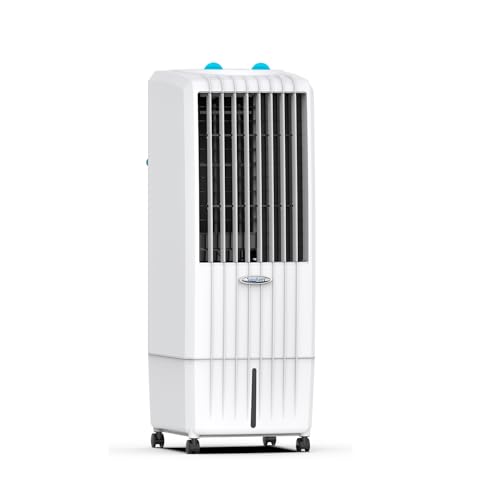
A personal air cooler is the smallest and most compact type of air cooler, designed to cool the immediate area around one person or a small corner of a room (typically up to 60–80 sq.ft). You will often see them on a study table, beside the bed, or next to a workstation.
Key specs you usually see
❄️ Air delivery / CFM: Lower than tower/desert, but focused (often 300–600 m³/h).
🪣 Tank capacity: ~10–25 liters.
⚡ Power consumption: ~50–150W, which can cost under ₹150–₹300/month if used 6–8 hours daily in many Indian states.
🔄 Form factor: Compact, often on castor wheels or with a handle for easy movement.
When a personal cooler makes sense
🏠 You stay in a small bedroom, hostel room, or PG with limited floor space.
💻 You need spot cooling while working—for example, next to your desk or sofa.
💰 You are extremely sensitive to electricity bills and prefer the lowest power usage among all air cooler types.
In a dry city, a good personal cooler can drop the perceived temperature by 4–7°C around you when used correctly with cross‑ventilation.
Limitations
⚠️ Struggles in large rooms or where several people expect cooling.
💦 In high humidity or monsoon, it mostly adds moisture and gentle airflow rather than true cooling.
Why You Should Buy a Personal Air Cooler: Choose a personal air cooler if you are cooling just yourself in a small, reasonably dry room, and want ultra‑low power consumption.
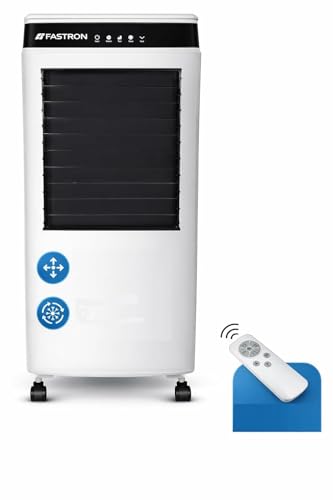
Best Personal Air Coolers in India
Tower Air Coolers: Slim Design, Better Coverage
What is a tower air cooler?
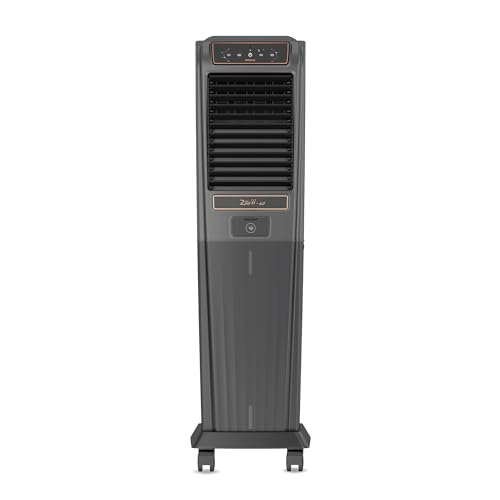
A tower air cooler is a tall, slim unit designed to combine better vertical air throw with a small footprint, ideal for modern apartments where floor space is limited. It sits between personal and desert coolers in terms of size and airflow.
Typical specifications
📐 Room coverage: Roughly 80–150 sq. ft., depending on model and CFM.
🪣 Tank capacity: Often 20–40 liters.
⚡ Power consumption: Around 100–200W, still far below split or window ACs.
🌬️ Air throw: Taller body + oscillation helps spread air more evenly in living rooms or larger bedrooms.
Strengths of tower air coolers
✅ Space‑saving: Slim design fits beside sofas or TV units without blocking pathways.
✅ Better circulation: Compared with personal coolers, tower coolers can cover more of the room vertically and horizontally.
✅ Aesthetic: Modern look that blends into decor, which matters for living rooms.
These coolers are a good middle ground among air cooler types if you want more reach than a personal cooler but find desert models too bulky or noisy.
Where tower coolers fall short
⚠️ Not ideal for very large halls or semi‑open spaces—they simply do not push enough air compared to desert coolers.
⚠️ Like all evaporative units, efficiency drops when humidity crosses ~60%, especially during the peak monsoon.
When to Consider Tower Coolers: Choose a tower air cooler for small to mid‑sized living rooms and bedrooms in hot‑dry or composite cities, when you care about both looks and coverage.
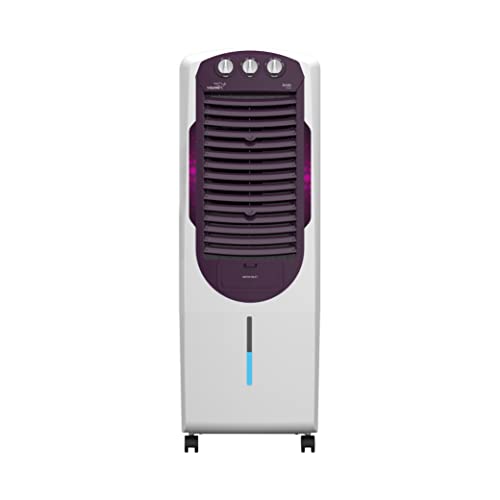
Best Tower Air Coolers

Desert Air Coolers: Heavy‑Duty Cooling for Big Rooms & Dry Heat
What is a desert air cooler?
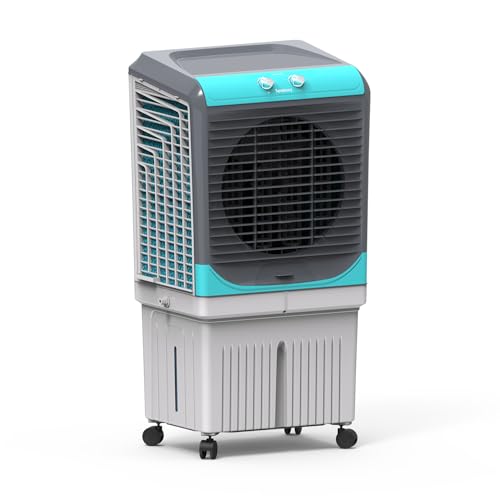
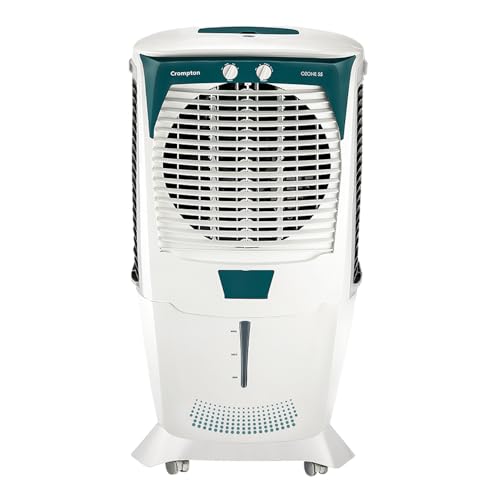
A desert air cooler is the workhorse among air cooler types—large body, big fan, thick pads, and a large tank, built for very hot and dry climates and large, ventilated spaces like halls, shops, verandas, and semi‑open areas.
Specs that define desert coolers
📐 Room coverage: Typically 150–300+ sq. ft.; some commercial units cool even larger open spaces.
🪣 Tank capacity: Often 40–80+ liters, letting them run for many hours without refilling.
🌬️ Air delivery: High CFM with strong air throw, often enough to reach across a long room.
⚡ Power consumption: Around 150–300W or more, but still far lower than a 1.5 Ton AC.
Policy and market studies in India note that evaporative air coolers (including desert types) can consume 80–90% less electricity and be about 80–85% cheaper up front than comparable RACs (room air conditioners). That’s a big reason why air coolers remain popular in many hot‑dry states.
When desert coolers are the best choice
☀️ You live in a hot‑dry or composite region (like Rajasthan, parts of Delhi‑NCR, MP, interior Maharashtra) and face 40–45°C summers.
🏬 You need to cool a large living room, shop, workshop, or semi‑open space with good cross‑ventilation.
💨 You want maximum air movement and a strong sensation of cooling, even at some noise cost.
Under the right conditions and with proper ventilation, desert coolers can bring down perceived temperatures significantly and feel almost AC‑like at a fraction of the energy cost.
Drawbacks of desert coolers
⚠️ Bulky and heavy; need floor space and sometimes a dedicated corner near a window or door.
🔊 Can be louder than smaller air cooler types due to larger fan motors.
💦 In coastal or very humid cities, they can make the room feel muggy rather than cool.
Which Cases Require Desert Coolers: Pick a desert air cooler if you have a large, well‑ventilated space in a mostly dry climate and want maximum cooling power per rupee.
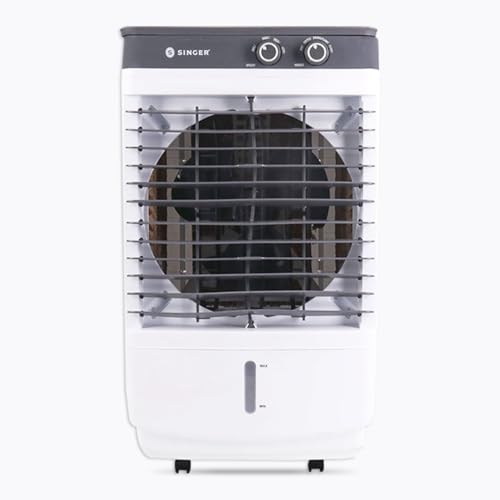
Best Desert Air Coolers

Window Air Coolers: Semi‑Permanent, Room‑Focused Cooling
What is a window air cooler?
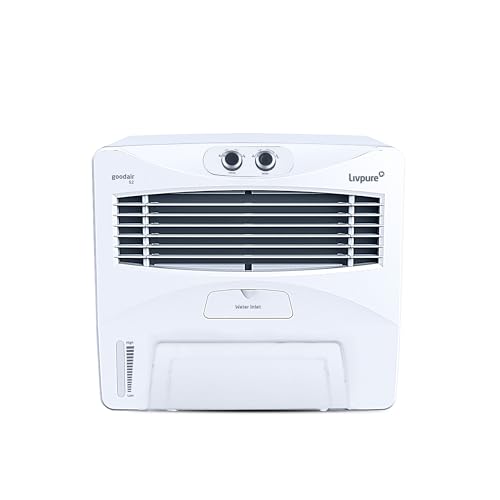
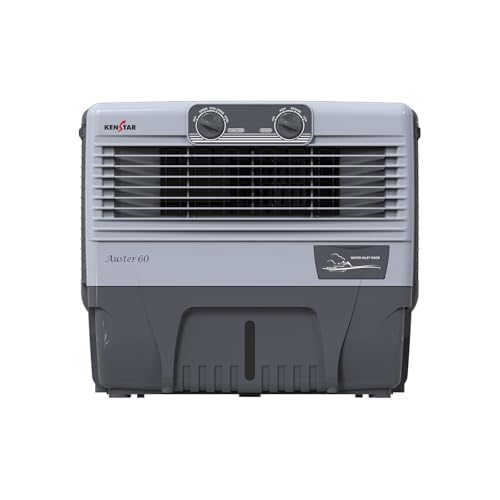
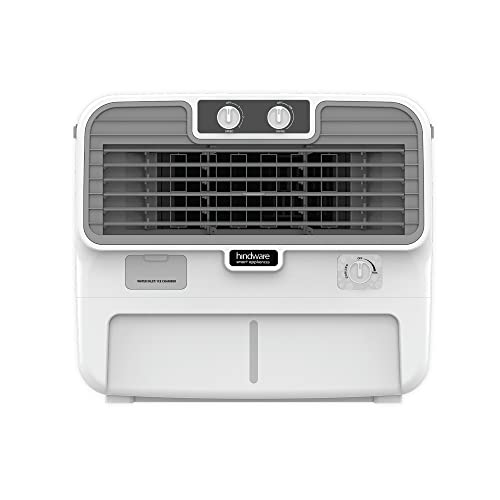
A window air cooler is installed in a window or wall opening, pulling fresh outdoor air across wet pads and blowing cooled air directly into the room—similar installation logic to a window AC, but using evaporative cooling instead of refrigerants.
Typical specs
📐 Room size: Generally 100–180 sq. ft., depending on fan and pad size.
⚡ Power: Around 150–250W—much lower than a 1 Ton window AC but slightly higher than some compact personal or tower coolers.
🪣 Water tank: Medium‑large (25–40+ liters), refilled from inside or outside depending on design.
🪣 Orientation: Sits partly outside; best for homes with a suitable window facing open air.
Advantages of window air coolers
✅ Saves floor space inside the room.
✅ Draws 100% fresh outdoor air, improving ventilation compared with split/window ACs that mostly recirculate indoor air.
✅ Continuous outflow helps push warm, humid air out, especially when used with a slightly open opposite window or door.
Because they are fixed in one place, window coolers are ideal when you need reliable cooling for one priority room—e.g., your main bedroom or home office.
Limitations
⚠️ Requires a suitable window opening or a wall cut‑out, which isn’t always available in rented flats.
🔧 Installation is more involved than a portable personal or tower cooler.
💦 Still limited by ambient humidity—performance drops sharply beyond 60–70% RH.
When to Buy Window Air Coolers: Choose a window air cooler if you want a semi‑permanent, floor‑space‑saving solution for a specific room in a relatively dry or composite climate.
Best Window Air Coolers
Personal vs Tower vs Desert vs Window Cooler [Table Comparison]
Here’s a summarized air cooler types comparison you can scan before deciding.
| Parameter | Personal Cooler | Tower Cooler | Desert Cooler | Window Cooler |
| Typical room size | Up to 80 sq.ft | 80–150 sq.ft | 150–300+ sq.ft | 100–180 sq.ft |
| Best climate | Dry / moderately dry | Dry/composite with outdoor access | Hot‑dry / composite, well‑ventilated | Needs a window/wall opening |
| Power usage | Lowest (50–150W) | Low (100–200W) | Low‑medium (150–300W+) | Low‑medium (150–250W) |
| Portability | Very high | High | Low | Fixed |
| Floor space | Very small | Small | Large | None (inside) |
| Installation | Plug & play | Plug & play | Sometimes needs duct/vent | Sometimes needs a duct/vent |
| Ideal use‑case | Single person, small room | Family bedroom, living room | Large hall, shop, semi‑open | One main room, long‑term use |
How to Choose the Right Air Cooler Type for Your Home
Instead of starting with brand names, start with four decisions:
1. Climate: Dry, Composite, or Humid?
☀️ If you live in a hot‑dry or composite climate (many North and West Indian cities), most air cooler types work well as long as humidity stays moderate.
💦 In coastal or very humid regions, simple evaporative coolers can feel clammy; you may need an AC or an advanced 2‑stage cooler if humidity regularly exceeds 60–70%.
2. Room Size & Layout
🛏️ Up to 80 sq.ft: Personal cooler.
🛋️ 80–150 sq.ft: Tower cooler or larger personal cooler if you sit close.
🏠 150–300 sq.ft: Desert cooler or high‑capacity tower if space is well‑ventilated.
🪟 Fixed primary bedroom: Consider a window air cooler if you have a suitable opening.
3. Ventilation & Placement
🔓 All air cooler types need fresh air and an exit path for humid air. Crack open a window opposite the cooler or leave a door slightly open for cross‑ventilation. 🚫 Without this, the room turns into a damp box and cooling drops quickly.
4. Budget & Operating Cost
In India, coolers are popular because they offer far lower ownership costs than ACs.
💸 A desert cooler running 12 hours a day at 300W can use about 108 units/month, costing around ₹750/month at ₹7 per unit.
💸 A 1.5 Ton AC at ~1.5 kW for 8 hours can use about 360 units/month, or roughly ₹2,500/month at the same tariff.
💡 If your usage is heavy but your budget is tight, air coolers make sense; if your climate is humid and bills are secondary, an AC may be justified.
5. Cooling Pads: Honeycomb vs Aspen
Most modern air cooler types now use either honeycomb pads (rigid, thicker, longer‑lasting, slightly costlier) or aspen/wood wool pads (cheaper, made of wood shavings, need more frequent replacement). Honeycomb pads generally offer better cooling efficiency, slower degradation, and easier cleaning, while wood wool pads can be attractive in very low‑budget models but may clog faster in dusty Indian cities. If you run your cooler daily through summer, it’s usually worth paying extra for honeycomb pads
Running Costs, Maintenance & Lifespan
Electricity
Studies and policy reports point out that evaporative air coolers in India can be 80–90% more energy‑efficient than conventional room ACs, making them a key tool for reducing residential cooling energy demand.
Maintenance
🧹 Monthly: Clean the dust filter, check the water level, and wipe the outer body.
🔄 Seasonal: Replace or deep‑clean cooling pads, clean the tank to prevent scale and algae, check pump and fan operation.
🛠️ Every few years: Replace pads and possibly the pump, depending on water quality and usage.
Because coolers have simpler mechanics and no refrigerant circuit, maintenance is usually cheaper and can often be done by the user, unlike ACs, which need trained technicians.
Noise Levels to Expect
💨 Personal & tower coolers are usually the quietest, suitable for bedrooms if you’re okay with a steady fan‑like whoosh.
💨 Desert coolers move a lot more air, so they are typically louder and better suited to halls, shops or verandas.
💨 Window coolers sit partly outside, so much of the fan noise stays outdoors, but vibration can travel through the wall if installation isn’t tight.
Checking decibel ratings where brands provide them—or watching user reviews—helps you avoid buying a cooler that feels too noisy for night use.
When an Air Cooler Will NOT Work Well
No matter which air cooler type you buy, you may be disappointed in scenarios like:
❌ Consistently high humidity (>70%): Common in coastal belts and during peak monsoon; evaporation slows dramatically, so the cooler mostly adds moisture.
❌ Closed, air‑tight rooms: No outlet for humid air, so the room gets stuffy and the perceived temperature barely drops.
❌ Very high expectations vs AC: Air coolers improve comfort a lot in the right conditions, but they will not deliver the same chilled, dry air as a high‑capacity AC in a sealed room.
If you tick two or more of these conditions, re‑evaluate whether an AC (or a hybrid strategy: cooler most days, AC only on worst days) might be a better long‑term decision.
Want Specific Product Picks? Start with Your Budget
This guide was about air cooler types, so you can decide which category fits you; the next step is shortlisting actual models based on budget and brand.
To save you time, GadgetVeda’s experts have curated price‑band‑wise recommendations for Indian buyers:
👉 Best air coolers under ₹5000 in India– ultra‑budget picks and compact personal coolers.
👉 Best air coolers under ₹6000 in India– better build quality and slightly larger tanks.
👉 Best air coolers under ₹7000 in India – stronger tower coolers and value desert models.
👉 Best air coolers under ₹8000 in India– higher CFM desert and window‑style coolers for bigger rooms.
Conclusion: Match the Air Cooler Type to Your Life, Not Just the Price Tag
India’s air cooler market crossed roughly INR 126 billion in 2025 and is projected to nearly double by 2034, driven by long summers, rising electricity costs, and a shift toward energy‑efficient cooling. That growth also means you now face dozens of shapes and sizes—personal, tower, desert, window—often with confusing marketing claims.
The key is simple:
👉 Go for a personal or tower air cooler if you live in a small flat or need focused cooling for one or two people.
👉 Choose a desert air cooler for big, airy spaces in hot‑dry regions where you want maximum air movement.
👉 Install a window air cooler when you have a dedicated room with a suitable opening and want a semi‑permanent, floor‑space‑free solution.
Used in the right climate and room, any of these air cooler types can deliver very comfortable summers at a fraction of AC running costs. Used in the wrong climate or room setup, even the best cooler will feel underwhelming.
At GadgetVeda, our goal is to help you decode the jargon and match specs to real life, not just chase tonnage or tank size on paper. Before you buy, we strongly recommend checking our expert‑curated guides on budget to mid-range air coolers from trusted brands like Crompton, Bajaj, and other leading air cooler brands in India, so that once you know your ideal type of air cooler, you can quickly find the right model and price point for your home.




![OnePlus Nord Buds 4 Review [Price, ANC & Battery Verdict]](https://gadgetveda.com/wp-content/uploads/2026/10/OnePlus-Nord-Buds-4-Review-GadgetVeda-150x150.webp)

![5 Best Smart TVs Under ₹15,000 in India [2026]](https://gadgetveda.com/wp-content/uploads/2026/10/Best-Smart-TVs-Under-₹15000-in-India-150x150.webp)



![OnePlus Nord Buds 4 Review [Price, ANC & Battery Verdict]](https://gadgetveda.com/wp-content/uploads/2026/10/OnePlus-Nord-Buds-4-Review-GadgetVeda-300x167.webp)

![5 Best Smart TVs Under ₹15,000 in India [2026]](https://gadgetveda.com/wp-content/uploads/2026/10/Best-Smart-TVs-Under-₹15000-in-India-300x167.webp)